Bag basics
Bag volume 101: why 1L ≠ 1L
Stated volume and usable volume are not the same number, and the difference is where buyers get burned.
The hook
Volume ratings measure the bag, not what fits in it. The number on the tag includes pocket cavities you can't pack the same things into, padded walls that eat usable space, and an empty shape that bears no resemblance to the loaded bag on your back.
What is it
Volume is typically measured by filling a bag's compartments with small pellets or water and measuring displacement. Brands differ in how they count: some include every exterior pocket and expansion zone, others measure only the main compartment. Two 30L bags from different brands can have a usable main compartment that differs by 5L or more. Three terms explain the gap: usable volume is what you can actually pack; packable volume is how it compresses when empty; perceived capacity is how efficiently the interior is laid out.
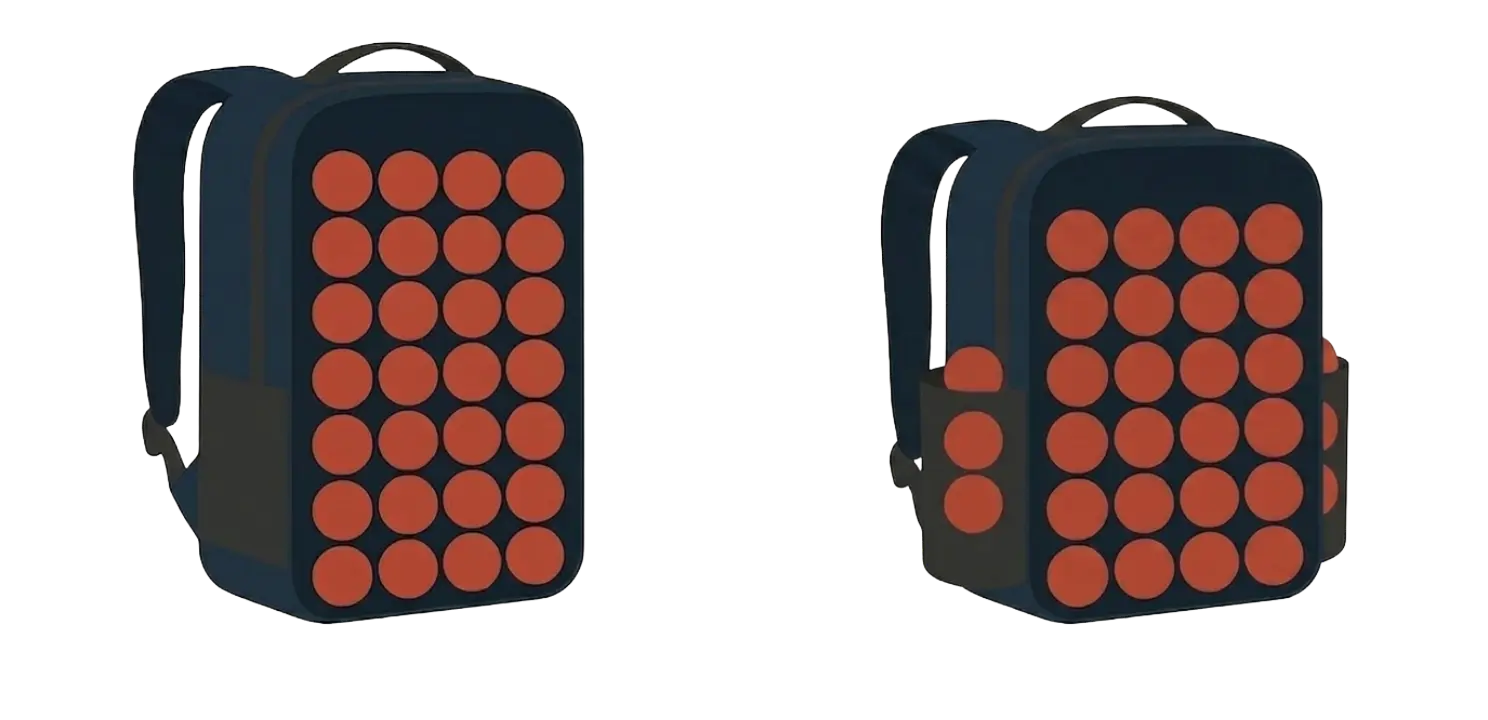
Construction moves the number too. A welded seam adds no internal material, but its join profile is thicker than a sewn seam, and on a small bag the cumulative difference across several seams is measurable in usable volume. Welded seams are also rigid at the join where sewn seams flex, so a welded bag holds its shape under load instead of bulging to absorb it. Same liter rating, different carry.
Why it matters
Real-world packing experience doesn't match the listed volume. A 30L camera bag with heavy internal padding carries far less than a sleek 25L commuter pack. Misleading ratings lead to overpacking and missed airline limits.
How to spot it
Compare shape and layout, not just the liter number. A tall, narrow bag and a squat, wide bag rated at the same liters will carry differently. Check for tapered walls, rigid vs. flexible structure, and padded dividers that eat into usable space. Test capacity by using packing cubes or consistent reference items (hoodie, laptop, water bottle). Also look for compression and expansion features that can change usable space.
Volume reference
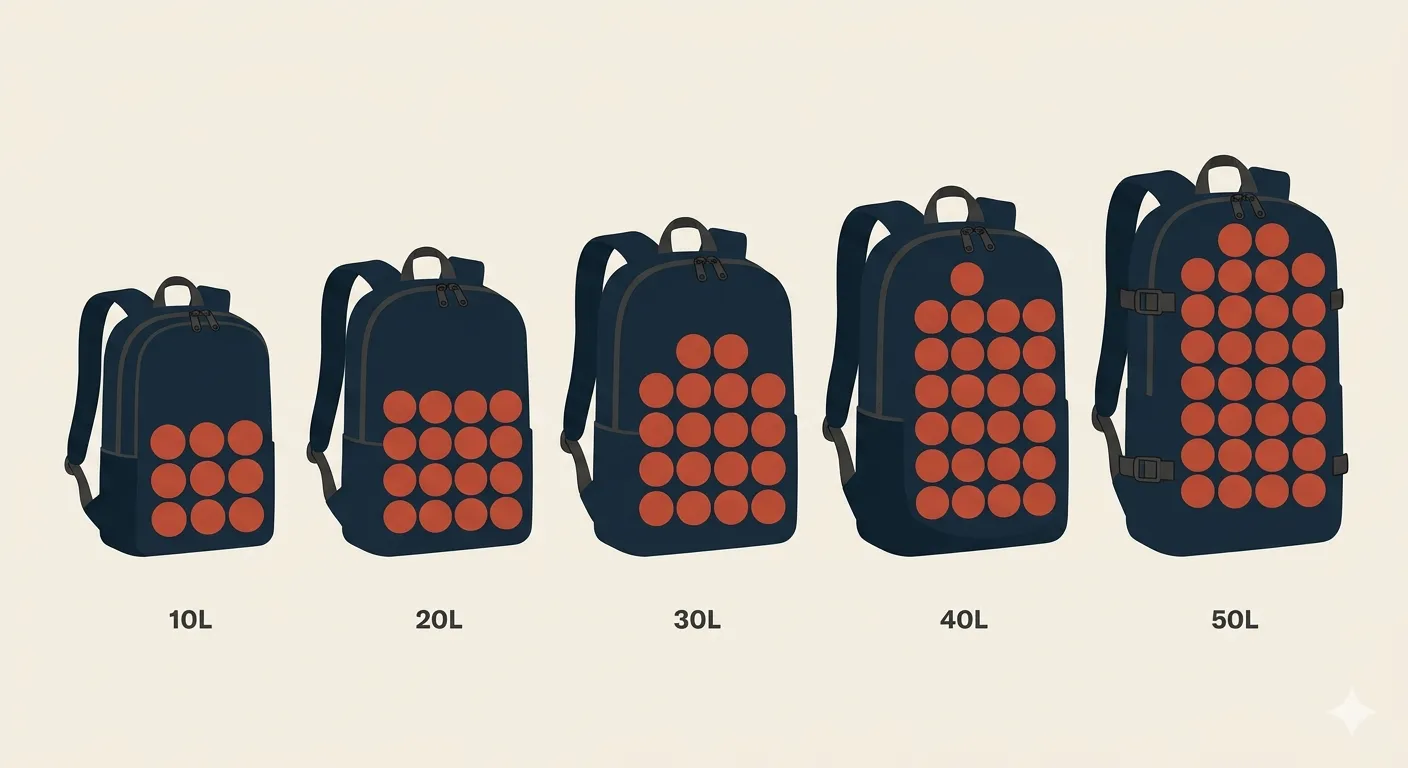
15–20L: laptop, water bottle, jacket, daily essentials. The smallest practical range for a commuter pack with a 15-inch laptop. Not enough for anything extra; enough for everything you need most days.
25–30L: laptop, change of clothes, toiletry bag, water bottle, and room for a packed lunch. The most common range for commute plus short trip in one bag. A well-shaped 28L often carries more usably than a poorly shaped 35L.
35–40L: carry-on range. Weekend gear, multiple clothing layers, full toiletries, laptop. Enough for a 3–4 day trip if you pack deliberately. Also where bags start feeling large for daily carry: volume you're not using adds dead weight.
45L+: multi-day travel territory. If this is also your everyday bag, it is probably too much bag. Carry-on compliance becomes the binding constraint before volume does.
When you don't need it
If your use case is fixed, a gym bag that always carries the same few items, the liter number doesn't matter. Pick a size that holds what you carry and move on. If you're prioritizing carry method, comfort, or fit over capacity, volume is a secondary spec: get those right first.
Key takeaways
- Don't take volume ratings at face value. Two bags with the same liter rating can carry very different amounts.
- Shape, compartment layout, and internal structure matter more than the number.
- Always cross-reference dimensions and layout with your packing needs.
- Use reference items (not just the spec sheet) to test carry capacity before buying.
Quick poll
When shopping for a bag, how do you gauge if it's big enough?