Bag basics
Strap management & keeper systems
Too many straps, nowhere to put them: why some bags feel chaotic to wear.
The hook
A bag with eight adjustment points and no strap keepers is a bag that always looks like it's exploding.
What is it
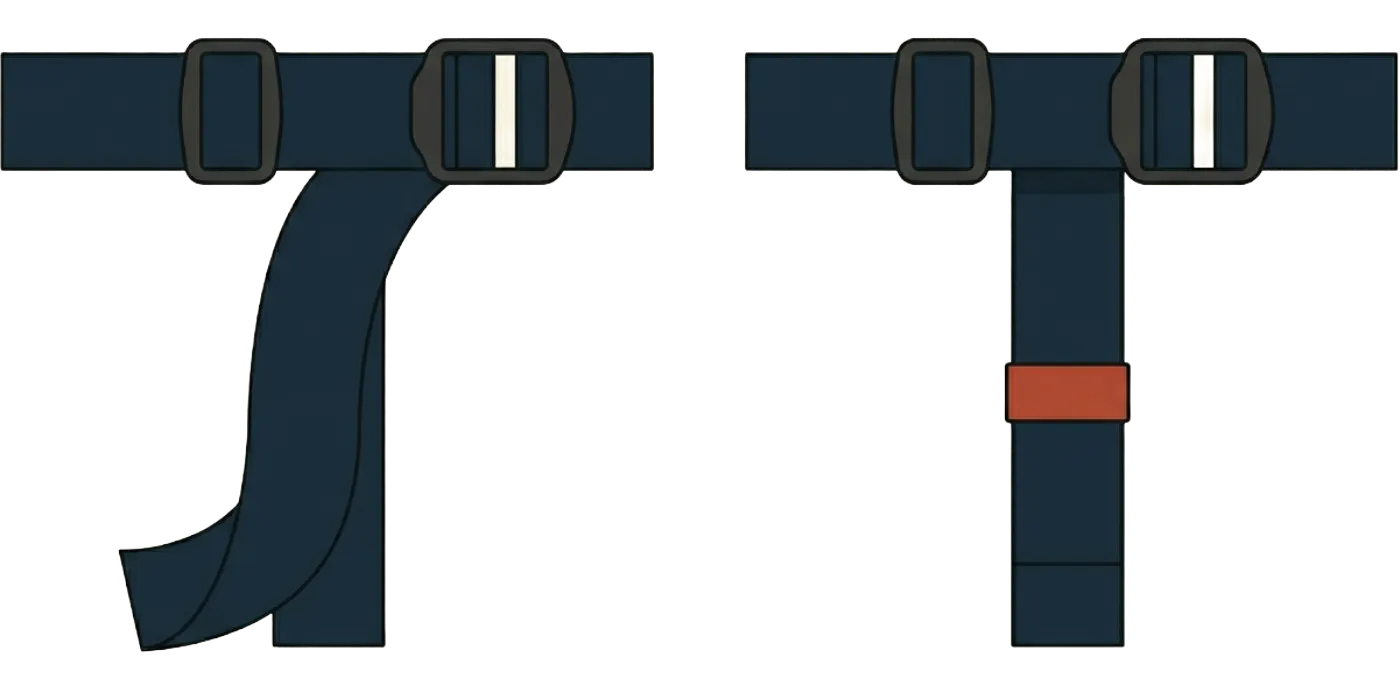
Strap keepers are elastic loops, snap closures, or velcro tabs that secure excess strap webbing after adjustment. They are present on quality bags and absent on many budget options. Every adjustment point on a bag generates potential excess: sternum straps, compression straps, load lifters, shoulder strap length, hip belt tails. Without keepers, that excess dangles, catches on doorframes, flaps in wind, and looks untidy. The too-strappy problem is common on technical bags: more adjustment points means more potential for loose webbing. More straps need more keepers, and minimalist bags sacrifice adjustability for a cleaner profile.
Why it matters
Dangling straps catch on things in tight spaces, make noise when walking, and look chaotic in professional environments. They signal a bag that hasn't been finished properly, like frayed hem on otherwise good clothing. A fully adjustable bag can look clean or chaotic entirely based on whether the manufacturer bothered with keepers. Most don't.
How to spot it
Check every adjustment point for a keeper or some way to manage the slack. Pull all straps to their longest position and observe the excess. Where does it go? Quality bags route excess through elastic loops, velcro tabs, or snap-through systems that fold it flat. Budget bags leave it to dangle. Also check keeper elasticity: cheap elastic loses tension within months and stops holding straps securely.
When you don't need it
Fixed-length straps with no adjustment generate no excess and need no keepers. Minimalist bags with single-width straps and no redundant adjustment points are inherently tidy. If simplicity over adjustability is a priority, a bag with fewer straps is cleaner than a bag with many straps and good keepers.
Key takeaways
- Strap keepers are a finishing detail that separates quality bags from budget ones. Check every adjustment point.
- Pull all straps to their longest position before buying and observe whether excess is managed.
- Cheap elastic keepers lose tension quickly. Check quality, not just presence.
- More adjustability means more potential strap chaos. Only buy adjustability you'll use.
Quick poll
How do you deal with excess strap length on your bag?