Bag basics
Zippers and durability: spot a quality zipper instantly
Your bag's most likely failure point, and how to choose wisely.
The hook
Your bag's weakest link is probably its zipper. It fails before the fabric, before the stitching, before the frame. And it's the thing most buyers never check.
What is it
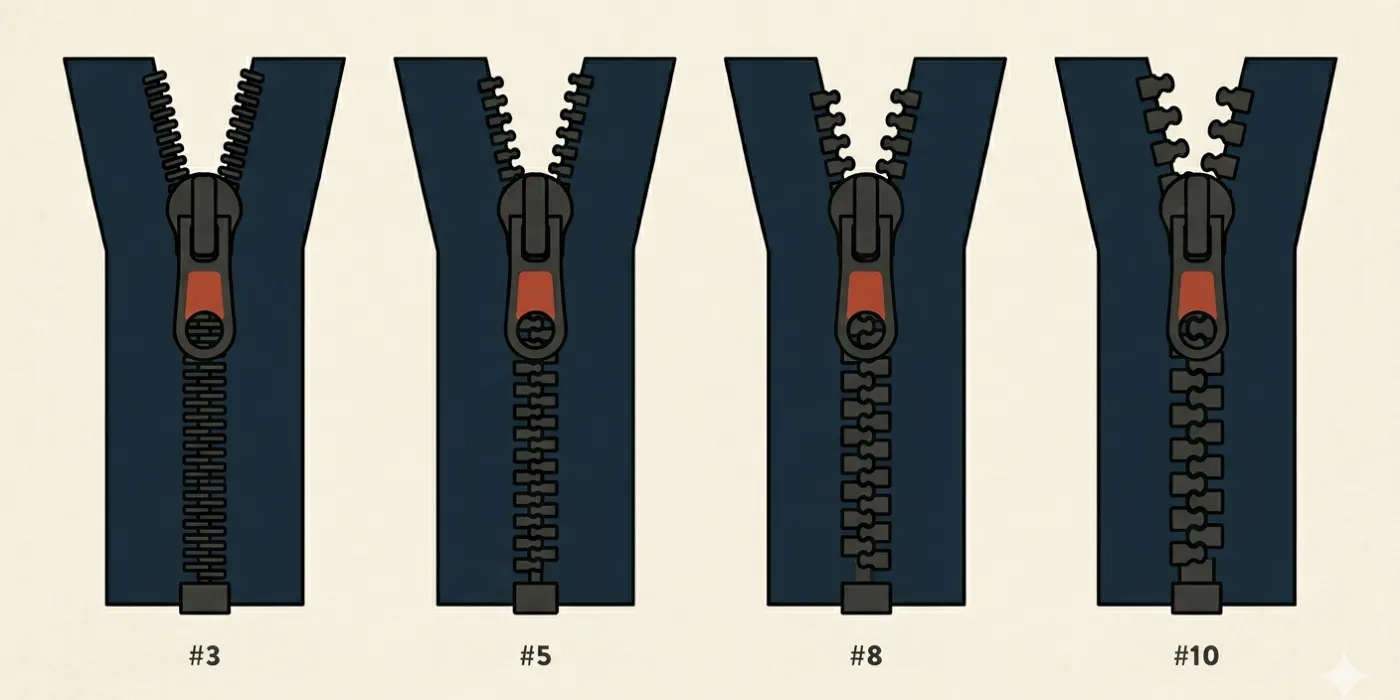
Zippers vary enormously in quality, material, and application. YKK is the industry benchmark for durability and consistency. Zipper types include coil (flexible and light, common in everyday bags), Vislon (molded plastic teeth, stiffer and more water-resistant), and metal (heavy, used in luxury goods). Size matters too: #5 zippers are standard; #10 are heavy-duty for main compartments. Reverse coil zippers have the teeth facing inward, cleaner looking and sometimes more water-resistant, but they can snag differently.
Why it matters
A failing zipper makes a bag unusable. It's also one of the hardest things to replace properly. The right zipper type for the right application determines both longevity and daily satisfaction. A heavy-duty main compartment zipper and a lightweight interior pocket zipper have different requirements.
How to spot it
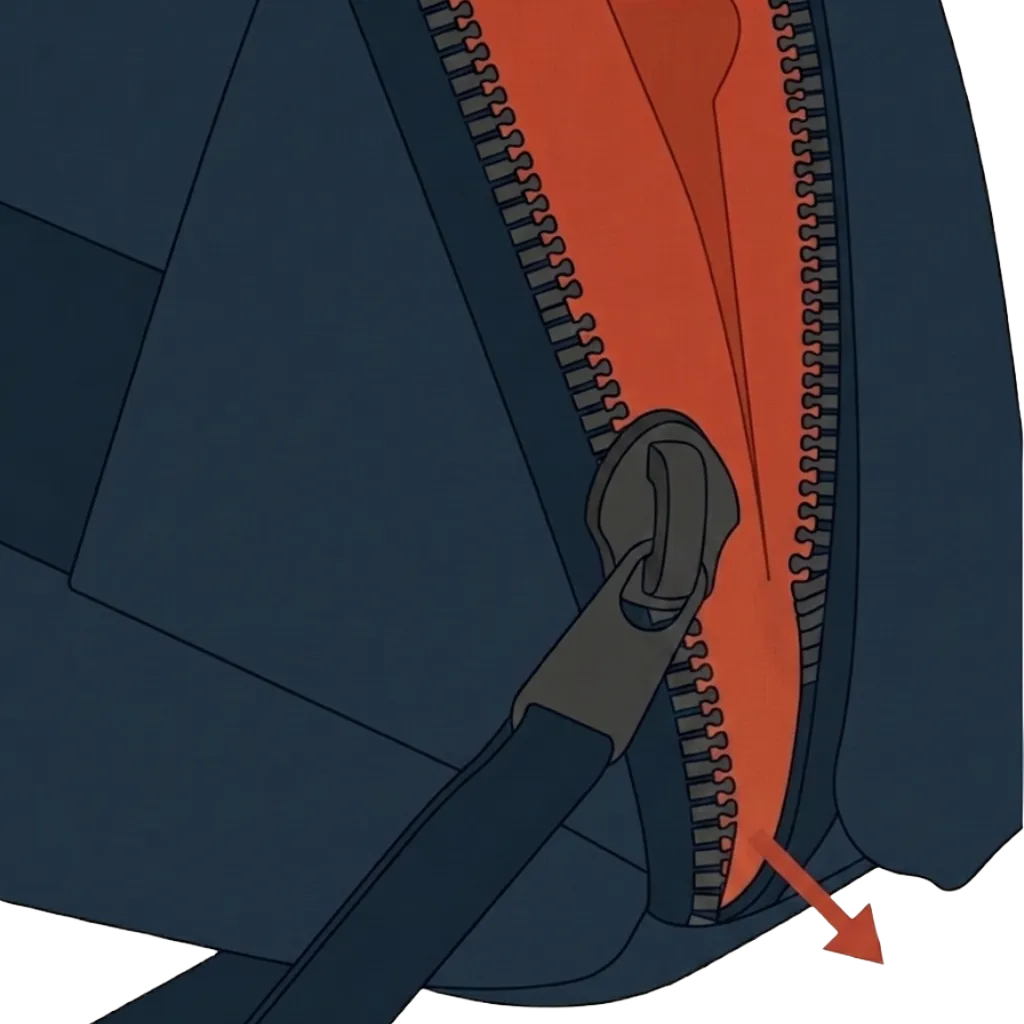
Feel the slide. Quality zippers glide smoothly with consistent resistance. Inspect tooth alignment; misaligned teeth indicate poor manufacturing. Pull test the zipper hard sideways. Cheap zippers separate under lateral stress. Look for reinforced zipper pulls that are easy to grab and won't snap off. Locking zippers (that need a tab to release) add security. Self-healing coil zippers can re-mesh if the slider gets misaligned.
When you don't need it
Over-engineered heavy-duty zippers on lightweight interior pockets or infrequently used compartments add unnecessary weight. Not every zipper needs to be YKK #10. Match the zipper grade to how much that compartment is used and loaded.
Key takeaways
- YKK is the benchmark for durability and consistency. Check the brand stamped on the slider before anything else.
- Match zipper type and size to the compartment's use and load. Different compartments have different requirements.
- A smooth, consistent slide and solid pull tab are your first quality checks.
- Locking zippers add security; self-healing coil adds resilience. Look for both on main compartments.
Quick poll
How do you think about zipper quality when buying a bag?