Bag basics
Stitching and construction: how to read a bag's build quality
The silent hero or villain of your bag's lifespan, including what grab handles tell you.
The hook
A bag fails at its seams before it fails at its fabric. The shell can hold up for years while a single bar-tack at a strap attachment lets go and ends the bag's working life in a moment.
What is it
Seam construction determines how well a bag holds together under load. Flat-fell seams (fabric folded and stitched twice) are the strongest. Bound seams add a tape over raw edges. French seams enclose raw fabric for a clean interior. Stress point reinforcement is applied at high-tension points: bar-tacks, box stitches, and rivets at strap attachments, grab handles, and zipper ends. Thread quality matters too: thicker, tighter-woven thread resists abrasion and UV degradation.
Why it matters
Poor stitching is the main cause of bag failure. Seams rip, straps detach, and zippers pull free. All from inadequate construction. Quality stitching at stress points is what separates a bag that lasts years from one that fails under a heavy load on a bad day.
How to spot it
Inspect stitch density: more stitches per inch means stronger seams. Look for consistency; crooked or uneven stitching signals rushed manufacturing. At strap attachment points, look for box-stitching or bar-tacks (small dense stitch clusters that prevent tearing). Tug hard on handles and straps to test attachment strength. Examine interior seams. Quality brands finish them cleanly, not just on visible exterior surfaces.
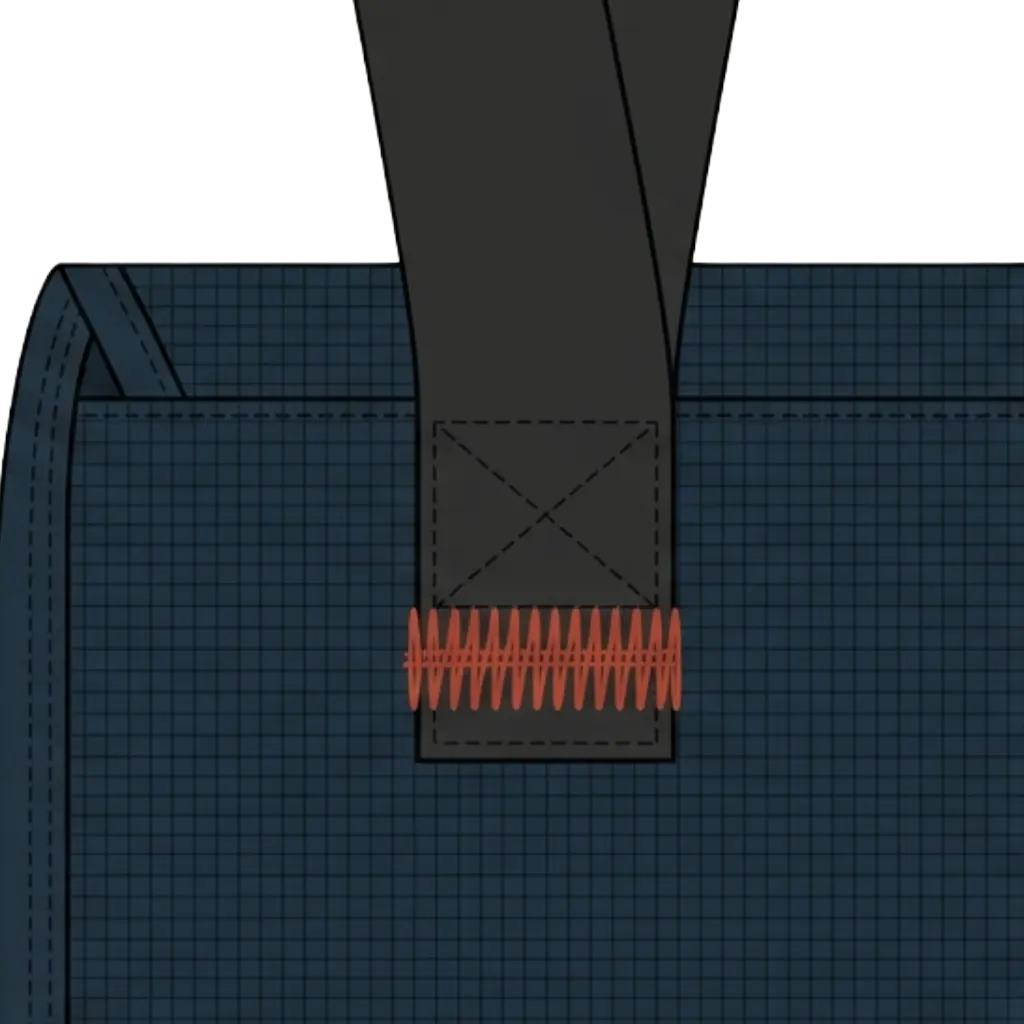
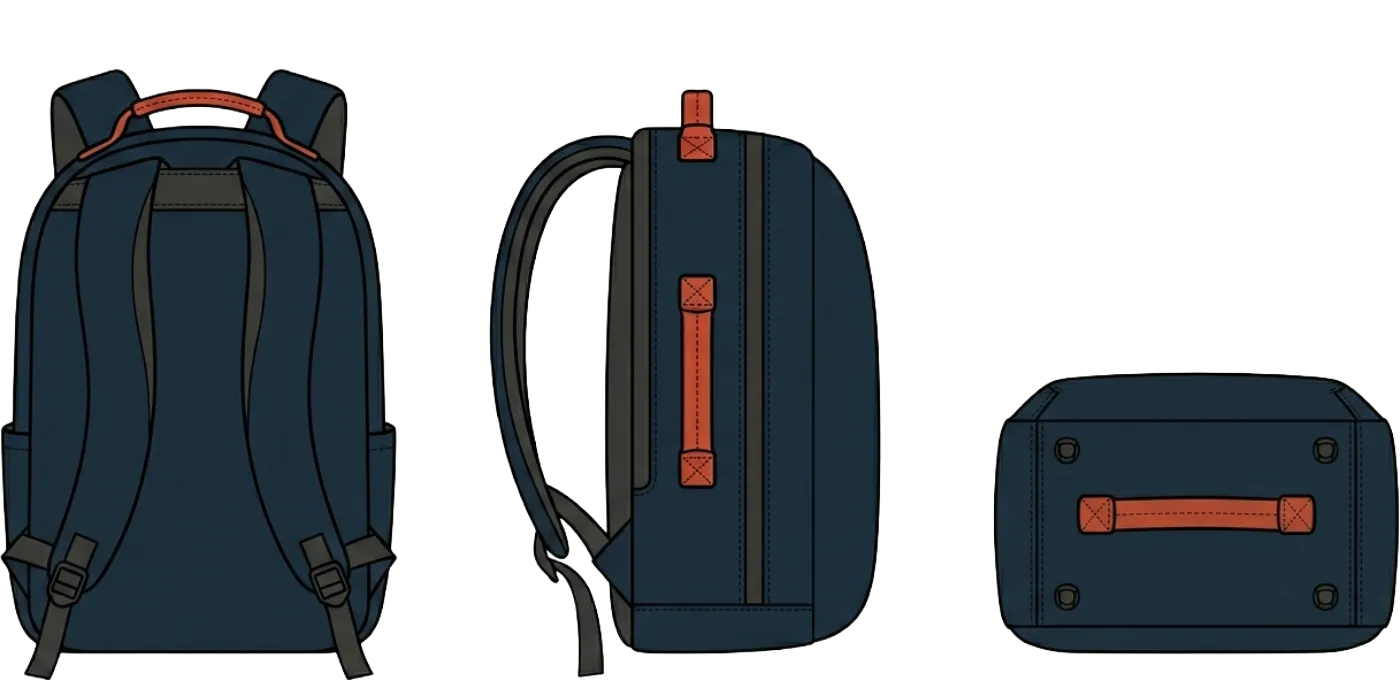
The grab handle is the fastest read of all of this on a finished bag. It is held to the body by the same stitch logic as the shoulder straps, but you can see it without unpacking anything.
When you don't need it
For very light, occasional-use bags (tote bags, promotional items), over-engineered stitching isn't necessary. But for any bag carrying a laptop, heavy gear, or used daily, construction quality should be non-negotiable.
Key takeaways
- Bar-tacks and box stitching at stress points are the most important quality indicators. Check every attachment point.
- Stitch density and consistency reveal manufacturing quality as much as brand name does.
- Tug test handles and straps in the store. Quality construction doesn't budge.
- Interior seam finishing shows how much a manufacturer cares about the parts you don't see.
Quick poll
Do you inspect a bag's construction before buying?