Load management & comfort
Straps and padding: what touches you
Strap shape, padding placement, and foam type are the contact points that determine all-day comfort.
The hook
A bag advertised with thick shoulder straps and a thick back panel can still hurt within an hour. Padding works where the body contacts the bag. Most pressure points are not where the most foam is.
What is it
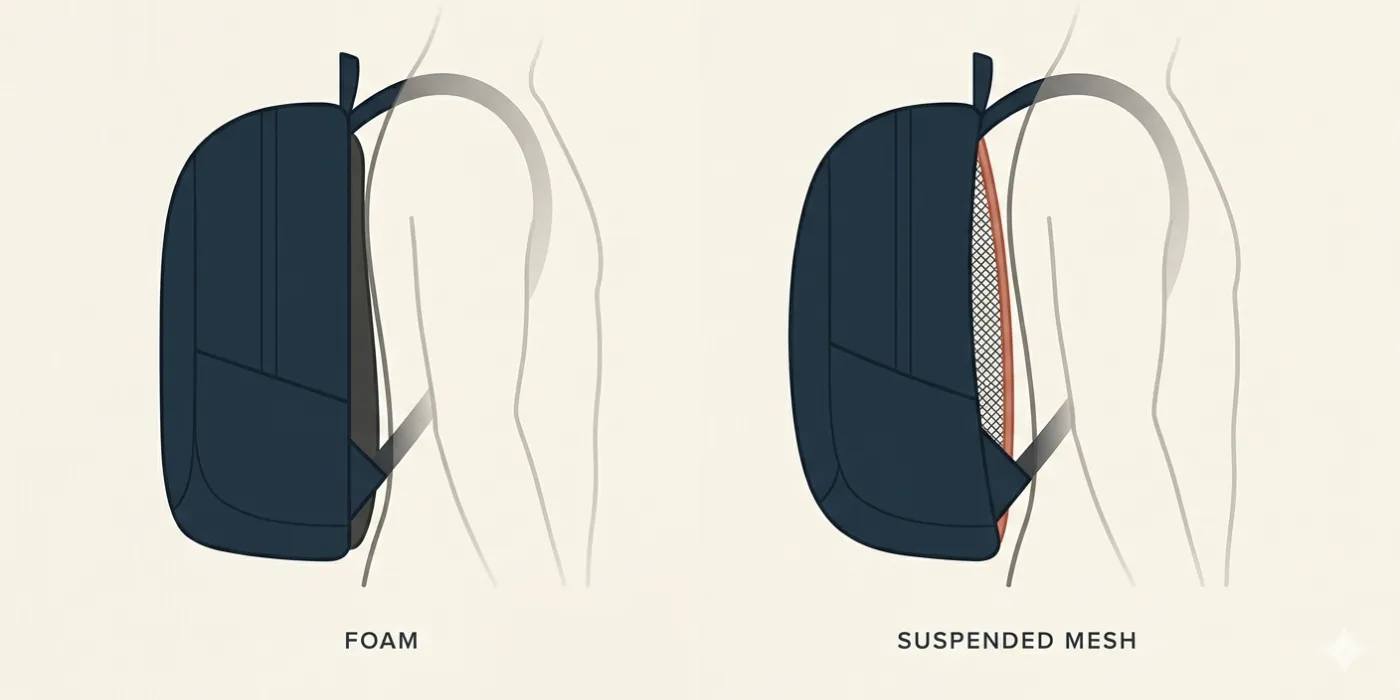
Effective padding exists at specific contact points: shoulder straps (dense foam contoured to follow the strap curvature), back panel (foam + mesh channels for ventilation), and hip belt (dense sculpted foam on all contact surfaces). Foam types matter: EVA (firm, durable) is better for structured packs; open-cell foam is softer but compresses under sustained load; memory foam feels great initially but heats up and doesn't recover quickly.
Why it matters
Poorly placed or insufficient padding creates pressure points that cause hot spots and numbness over extended carries. Back panel ventilation channels prevent heat buildup. A sweaty back is a sign of inadequate airflow design. Shoulder strap padding that narrows at the top, toward the neck, reduces hotspots where straps dig into the trapezius.
How to spot it
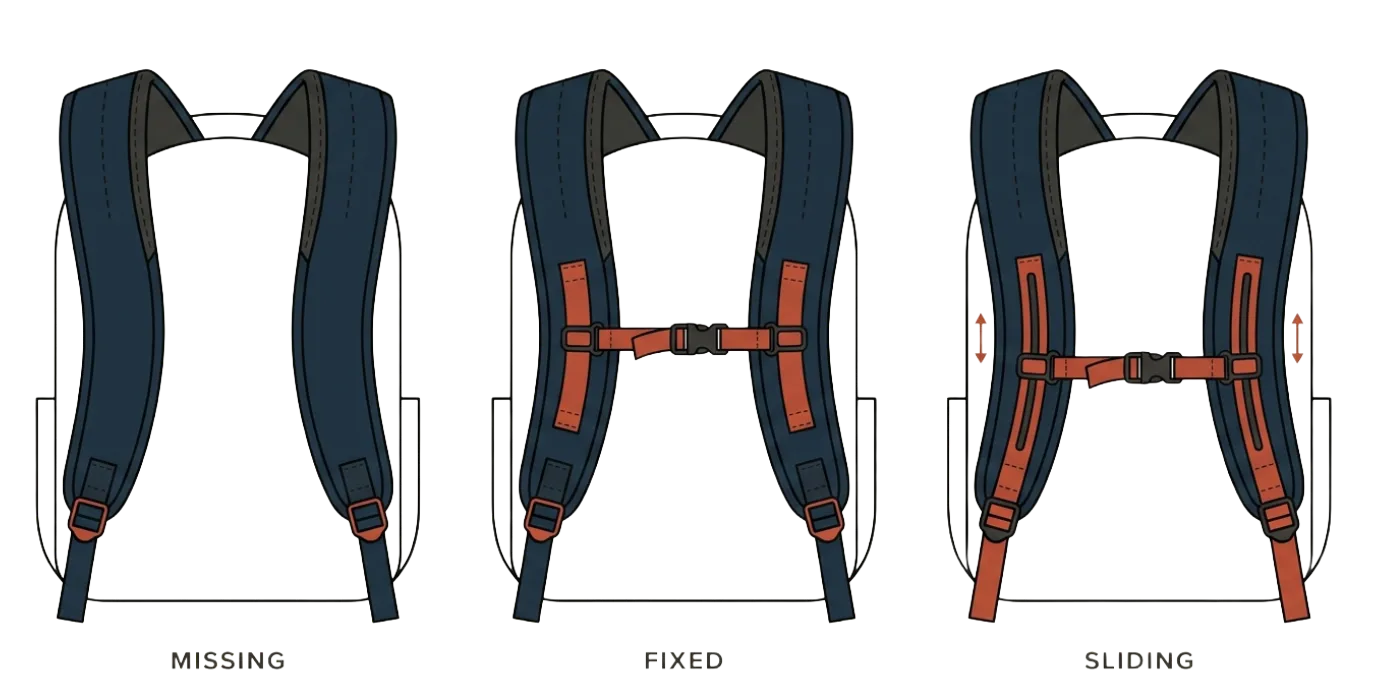
Feel the back panel with your hand. Clear channels or raised mesh areas indicate airflow design. Test shoulder strap contour: it should follow a slight S-curve to follow your shoulder anatomy. Press the hip belt padding hard. It should resist compression. Check whether the sternum strap slides along its rail or is fixed at one anchor point. A fixed strap that lands too high or low can chafe with no fix. Load the bag and wear it for 5 minutes to find immediate pressure points before you buy.
When you don't need it
For lightweight bags carried only for short periods, minimal padding is often a deliberate weight-saving choice. Technical ultralight packs sacrifice padding for weight savings, right when total load is under 10 pounds.
Key takeaways
- Dense, contoured foam at shoulder straps and hip belt matters more than total padding thickness.
- Back panel ventilation channels are as important as back panel padding. Test airflow, not just softness.
- Wear the bag for 5 minutes in the store with some weight. Pressure points show up fast.
- Memory foam feels best initially but compresses under sustained load. EVA is more reliable for all-day carry.
Quick poll
When your bag causes discomfort, where do you usually feel it first?