Load management & comfort
Torso size: the critical fit factor
You wouldn't wear the wrong shoe size. Why carry the wrong torso size?
The hook
You wouldn't wear the wrong shoe size. So why settle for a backpack that doesn't fit your torso? Torso length is the single most important fit measurement for any load-bearing backpack.
What is it
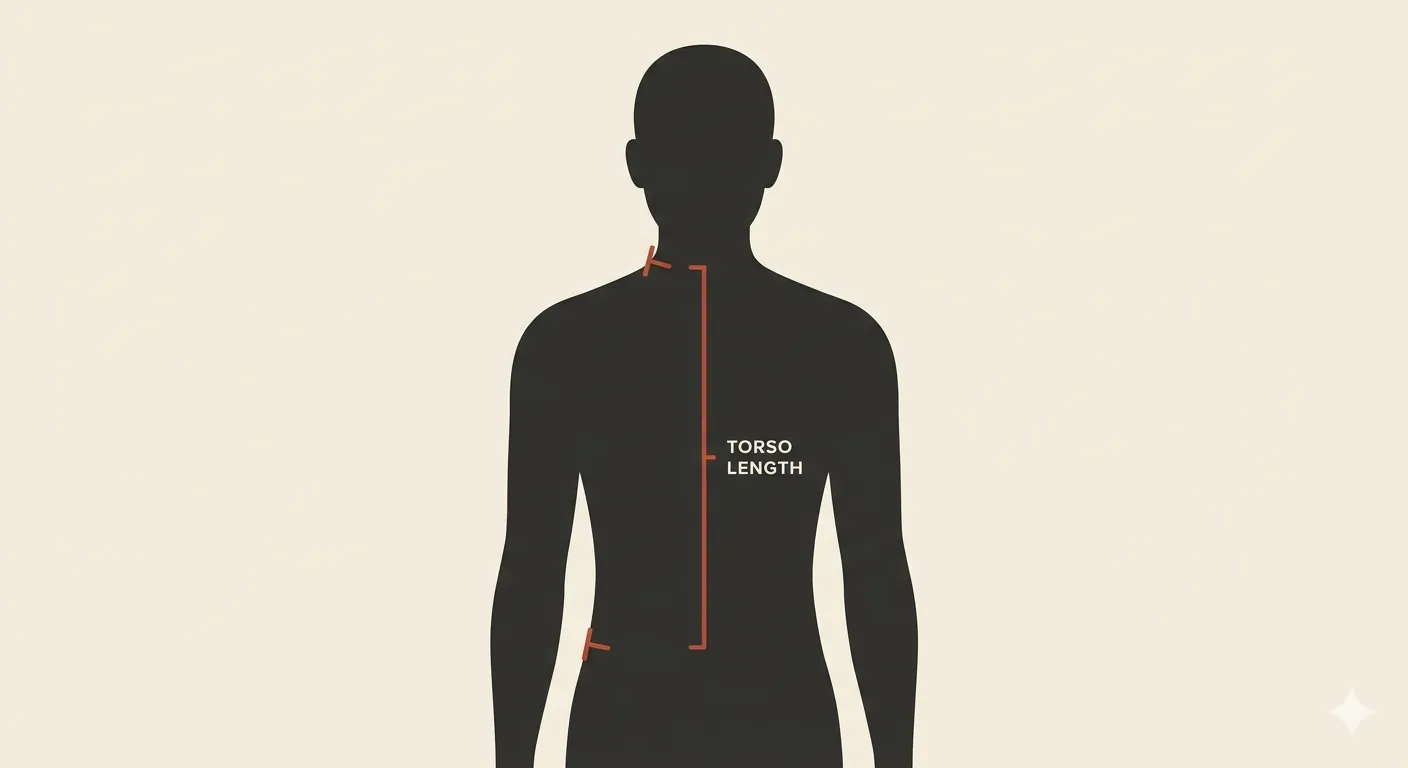
Torso length is measured from the C7 vertebra (the prominent bone at the base of the neck) to the iliac crest (the top of the hip bones). This measurement determines which bag size fits your back geometry. Bags are available in small (typically 16–18 inches), medium (18–20 inches), and large (20+ inches) torso lengths, sometimes with adjustable harness systems that cover a range. Unisex vs. gender-specific sizing also matters. Women's-specific bags typically have shorter torso lengths and adjusted strap curvature.
Why it matters
A bag too long for your torso sits on your tailbone rather than your hips, shifting all weight to the shoulders. A bag too short doesn't engage the hip belt at the right point, eliminating its load-transfer benefit. Either mismatch causes the discomfort most people blame on the bag being heavy. It's actually the bag being wrong for their body.
How to spot it
Measure your torso: stand straight, tilt your head forward to find C7, measure straight down your spine to your iliac crest. Compare to the bag's torso size range. On adjustable harness systems, check the adjustment range covers your measurement. Try the bag on: hip belt should sit centered on your iliac crest, not on your waist or below.
When you don't need it
For small bags (under 10L), slings, or light EDC bags where load transfer isn't the goal, torso length is less relevant. For bags under 15 lbs carried for short periods, fit precision matters less.
Key takeaways
- Measure your torso length before buying any backpack intended for loads over 15 pounds.
- The hip belt should land on your iliac crest. If it rides high or low, the torso size is wrong.
- Adjustable harness systems give the most flexibility but should still be verified against your measurement.
- Women's-specific sizing matters. Unisex sizing often fits shorter torsos poorly.
Quick poll
How did you size your current bag?