Load management & comfort
Understanding load transfer hierarchy
How weight moves through your body, and why how close the bag sits matters as much as how heavy it is.
The hook
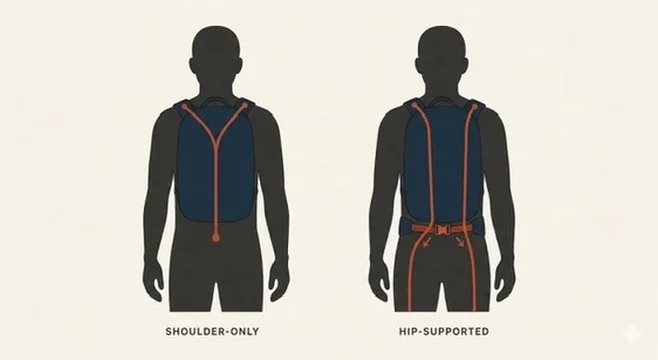
A 12 kg bag carried on the shoulders and a 12 kg bag carried on the hips are two different weights as far as your body is concerned. Same load. Different muscles. The harness is what routes one to the other.
What is it
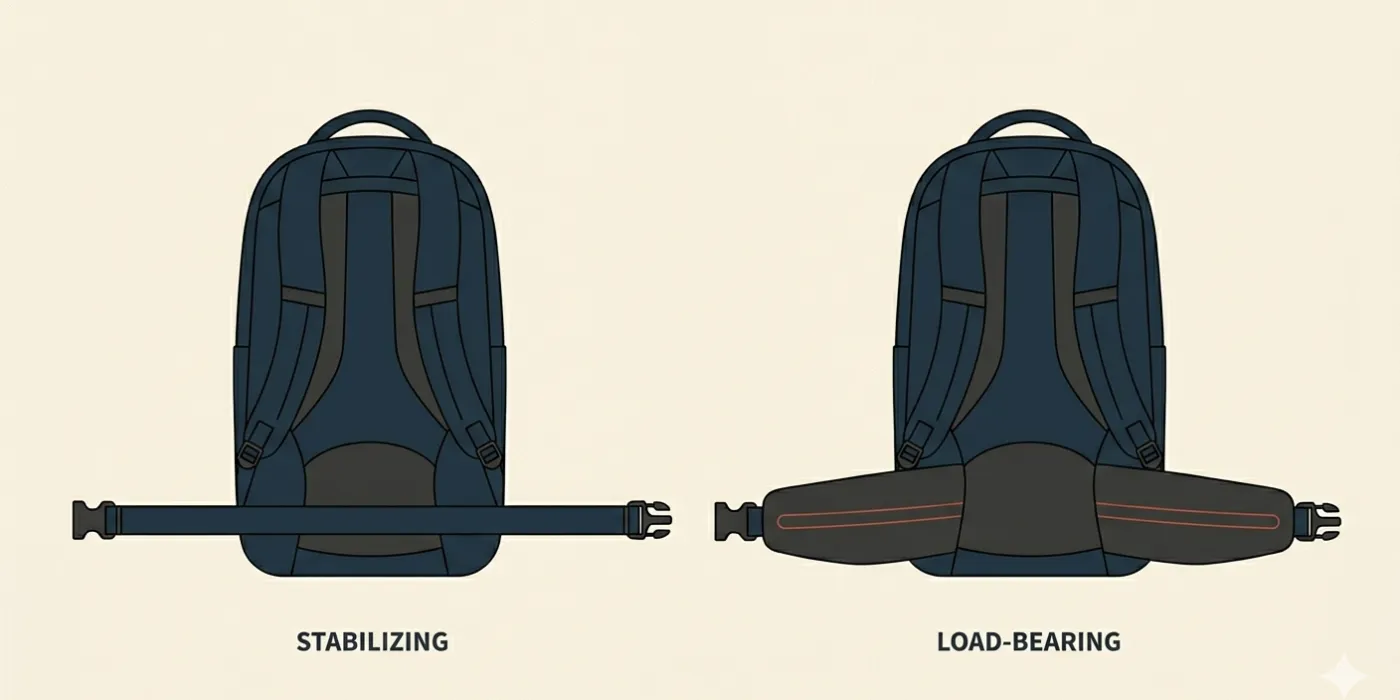
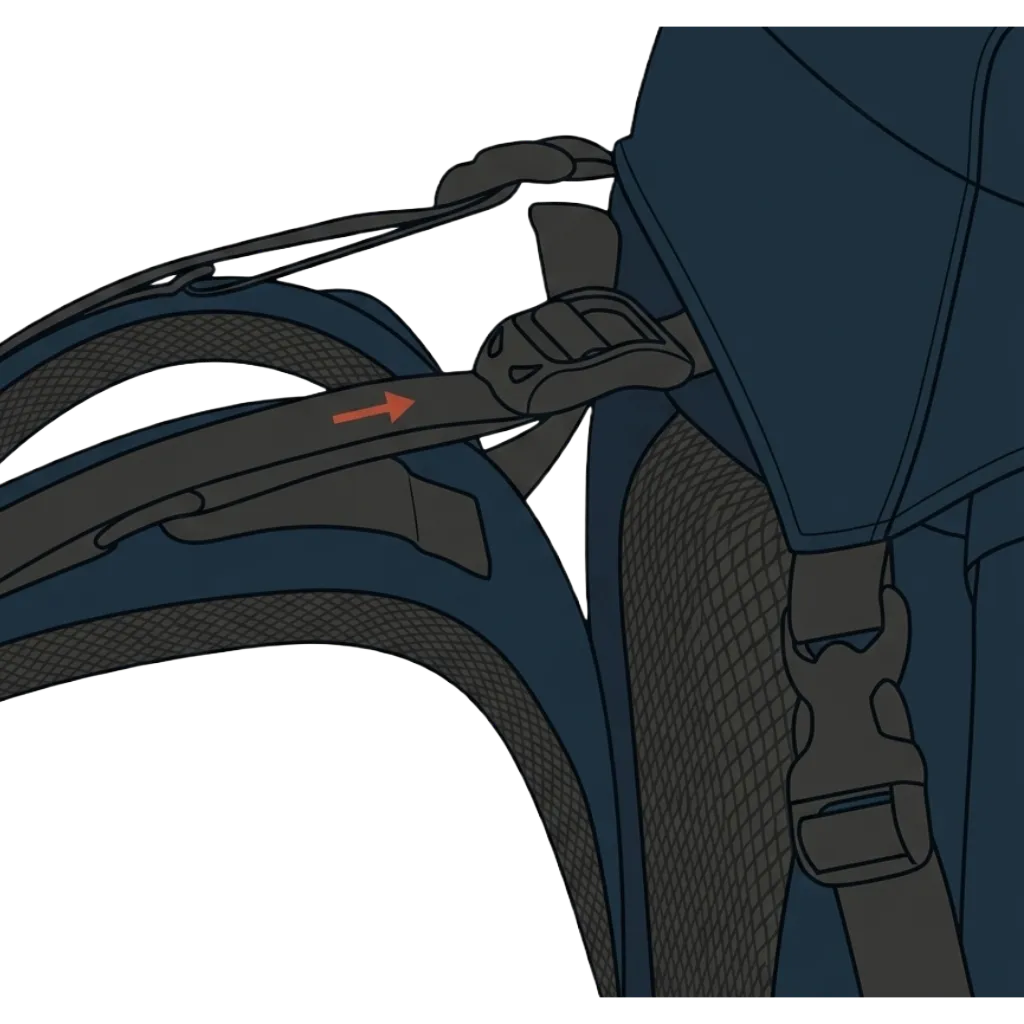
Load transfer hierarchy is the chain of weight distribution from the pack through your body: Pack → hip belt → iliac crest → hips → legs. Secondary: shoulder straps distribute residual load across the upper body. Tertiary: sternum strap maintains stability and strap position. Load lifters set the angle. The goal is to move 70–80% of load to the hips and legs, the strongest muscle groups, leaving shoulders to guide and stabilize, not bear weight.
Why it matters
Shoulder muscles fatigue in 20–30 minutes under heavy loads. Hip and leg muscles can sustain the same load for hours. When the hierarchy works, a 30-pound pack feels like 20. When it fails (usually because the hip belt isn't engaged or the torso size is wrong), every pound feels like two. Understanding this changes how you buy and how you pack.
How to spot it
A bag that does this well has: a rigid padded hip belt connected to the frame, load lifters that pull the top of the pack in, and shoulder straps that guide without bearing main load. When properly fitted and loaded, you should be able to lift your shoulders slightly without feeling the pack's weight change. It should be riding on your hips.
When you don't need it
For light daypacks under 10–15 lbs, the load transfer hierarchy is minimal and unnecessary. Simple shoulder carry is fine for light, short-duration carries.
Key takeaways
- The load transfer goal: 70–80% of weight on your hips, 20–30% on your shoulders. Shoulders guide, hips carry.
- If your shoulders are bearing the majority of a heavy pack's weight, something is wrong: hip belt, torso size, or load lifters.
- Pack testing: when properly fitted, lifting your shoulders slightly shouldn't change the felt weight much.
- This hierarchy only works when every component (hip belt, load lifters, torso length, packing order) is right at the same time.
Quick poll
Where does your bag's weight end up on a long carry?