Load management & comfort
Load lifters: the adjustment nobody uses
The most-ignored adjustment on a loaded pack, and why it changes how heavy weight feels.
The hook
The load lifter is the small angled strap above the shoulder strap that almost nobody adjusts. On a loaded pack it determines whether the bag rides flush against your back or pulls you backward. Most buyers never touch it.
What is it
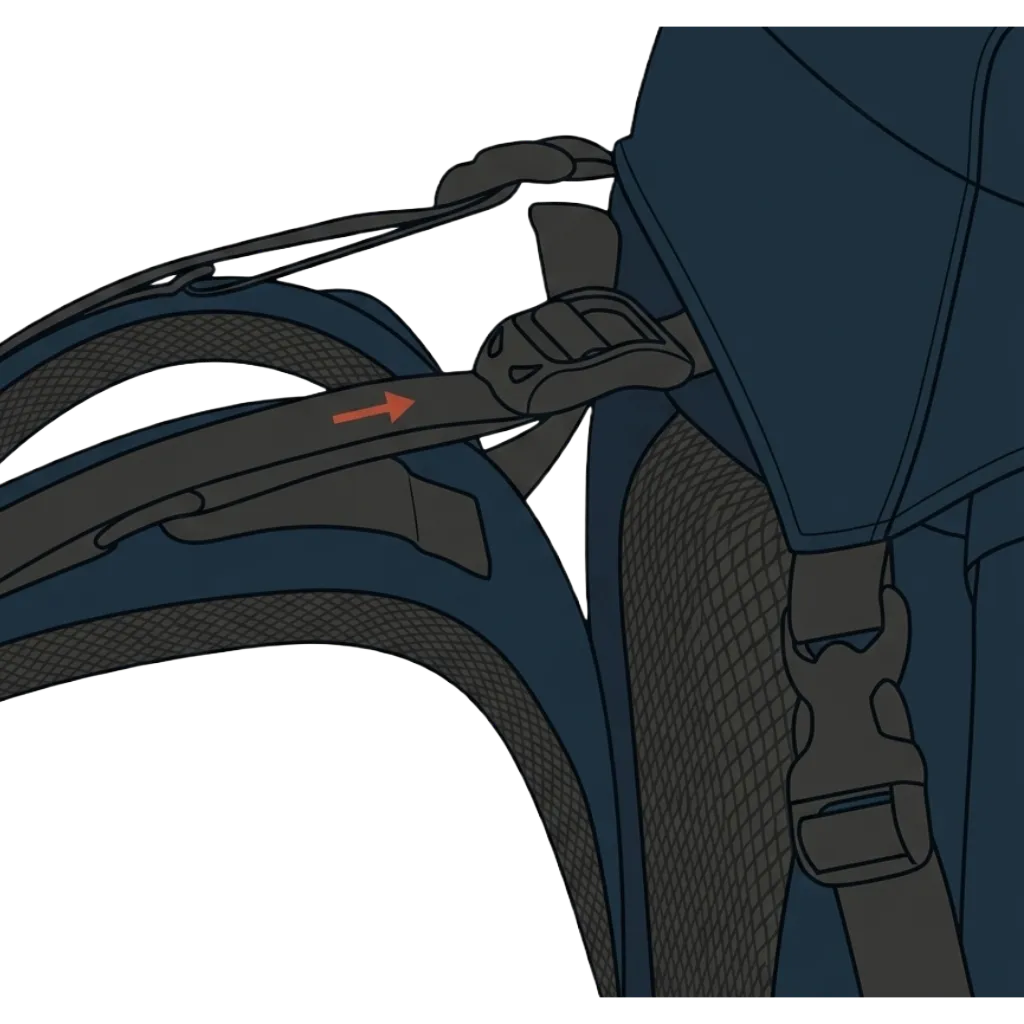
Load lifters are small straps connecting the top of the shoulder straps to the top of the pack frame. When tightened, they pull the top of the pack closer to your body, angling the shoulder straps more favorably and reducing the leverage effect of a heavy pack pulling your upper body backward.
Why it matters
Without load lifters, a heavy pack's top tends to tilt away from your body, creating a lever arm that compounds the felt weight and strains the lower back. Properly adjusted load lifters eliminate this effect. The same weight feels lighter. They're the adjustment most buyers ignore and most guides mention last.
How to spot it
Look for small angled straps at the top of the shoulder straps, connecting to the top of the bag at approximately 45 degrees. Quality load lifters have proper buckles and webbing (not just elastic). Test their range of adjustment. Some bags have fixed load lifters that can't be adjusted. These are much less useful.
When you don't need it
For bags without an internal frame or lightweight bags where precise load transfer isn't necessary, load lifters are absent or irrelevant. They're specifically meaningful for technical packs above 20L used with heavier loads.
Key takeaways
- Load lifters reduce the leverage effect of heavy packs. They should angle at approximately 45 degrees when properly adjusted.
- Adjust load lifters after hip belt and shoulder straps are set. They're a fine-tuning tool, not a first adjustment.
- Fixed load lifters are much less useful than adjustable ones. Check they can be tuned for your body.
- This is the most-ignored adjustment on packs that have it. Learn to use it and you'll feel the difference immediately.
Quick poll
How often do you adjust your bag's straps beyond just the shoulder straps?