Load management & comfort
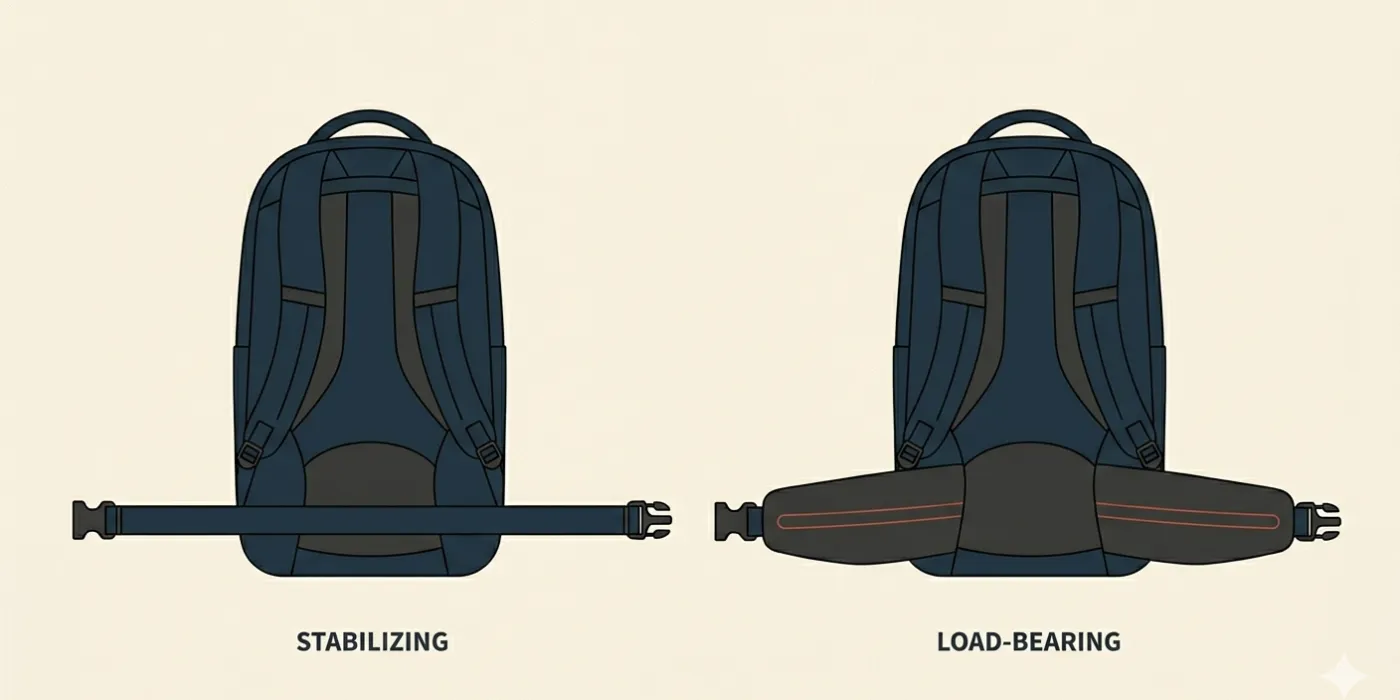
Stabilizing vs. load-bearing hip belts
The difference that determines whether your back survives a full day of carry.
The hook
Most hip belts on most bags are decorative. They sit on your waist, do not transfer load, and exist because the silhouette of the bag wanted one. The hip belt that moves weight off your shoulders is a different piece of engineering.
What is it
A bag's belt comes in two shapes. A stabilizing belt is a thin, lightly padded strap that prevents the bag from swaying side to side without transferring meaningful weight to the hips. A load-bearing hip belt is a thick, sculpted, rigid structure connected to the bag's frame that actively transfers 60–80% of pack weight from shoulders to the stronger hip and leg muscles. The distinction is clear in the design: load-bearing belts have their own structural channels and connect directly to the framesheet.
Why it matters
The shoulders-to-hips physics is covered in load-transfer. The relevant point here: only a load-bearing belt executes that transfer. A stabilizing belt looks the same on a product page and does none of the work. On a 30+ pound pack, that distinction is the difference between arriving with energy and arriving depleted. Under 15 pounds, stabilizing is enough.
How to spot it
Feel the padding density and rigidity. Load-bearing belts have sculpted foam that maintains shape under pressure. Look for how the belt attaches to the bag: a simple sewn attachment is stabilizing; a rigid channel or pivot system indicates load-bearing. Try the bag on and cinch the belt. Your shoulders should feel the weight reduce noticeably.
When you don't need it
For daypacks or light everyday bags (under 15 lbs), the additional structure and weight of a true load-bearing hip belt isn't justified. For short carries or bags under 20L, a simple stabilizing belt or no belt suffices.
Key takeaways
- Load-bearing hip belts are essential for loads over 15–20 pounds and extended carry. They move weight from shoulders to hips.
- Feel the belt's rigidity and connection to the bag's frame to distinguish load-bearing from stabilizing.
- Cinch the hip belt first, then the shoulder straps. The order is what makes the transfer work.
- For bags under 20L or loads under 15 pounds, a simple stabilizing belt is enough.
Quick poll
Do you use the hip belt on bags that have one?