Travel-specific features
Compression straps and packing efficiency
How compression straps stabilize a load, and when they earn the extra hardware.
The hook
A half-empty bag is a worse carry than a full one. Loose contents shift, the bag swings, and the load becomes a moving weight on your back. Compression straps are how a bag stays carryable across the volume range it's used at.
What is it
Compression straps cinch the bag's contents down to reduce volume and prevent shifting. Internal compression straps attach to the interior and anchor clothing layers. External straps run across the outside and compress the whole bag profile. Side compression straps narrow the bag's width, which is what gets a bag through a gate sizer. Some bags have all three; many have none.
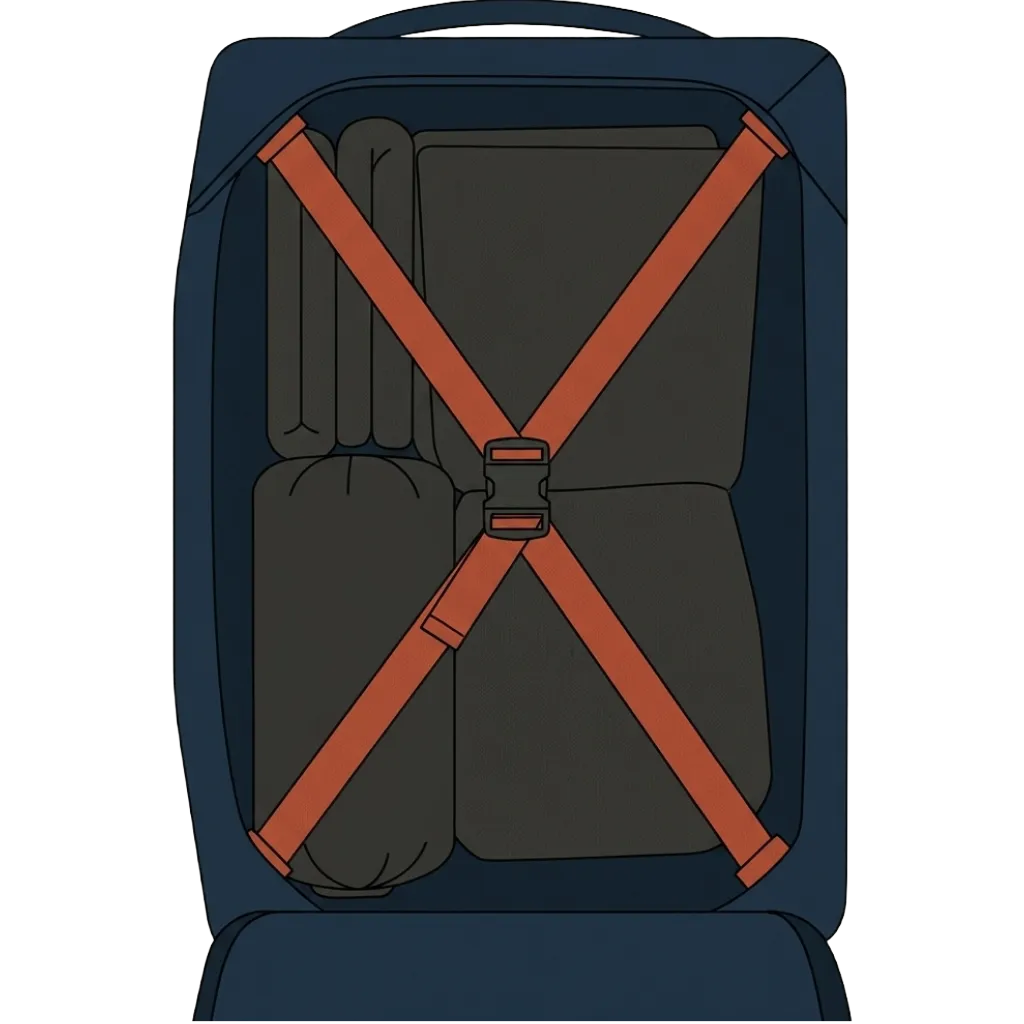
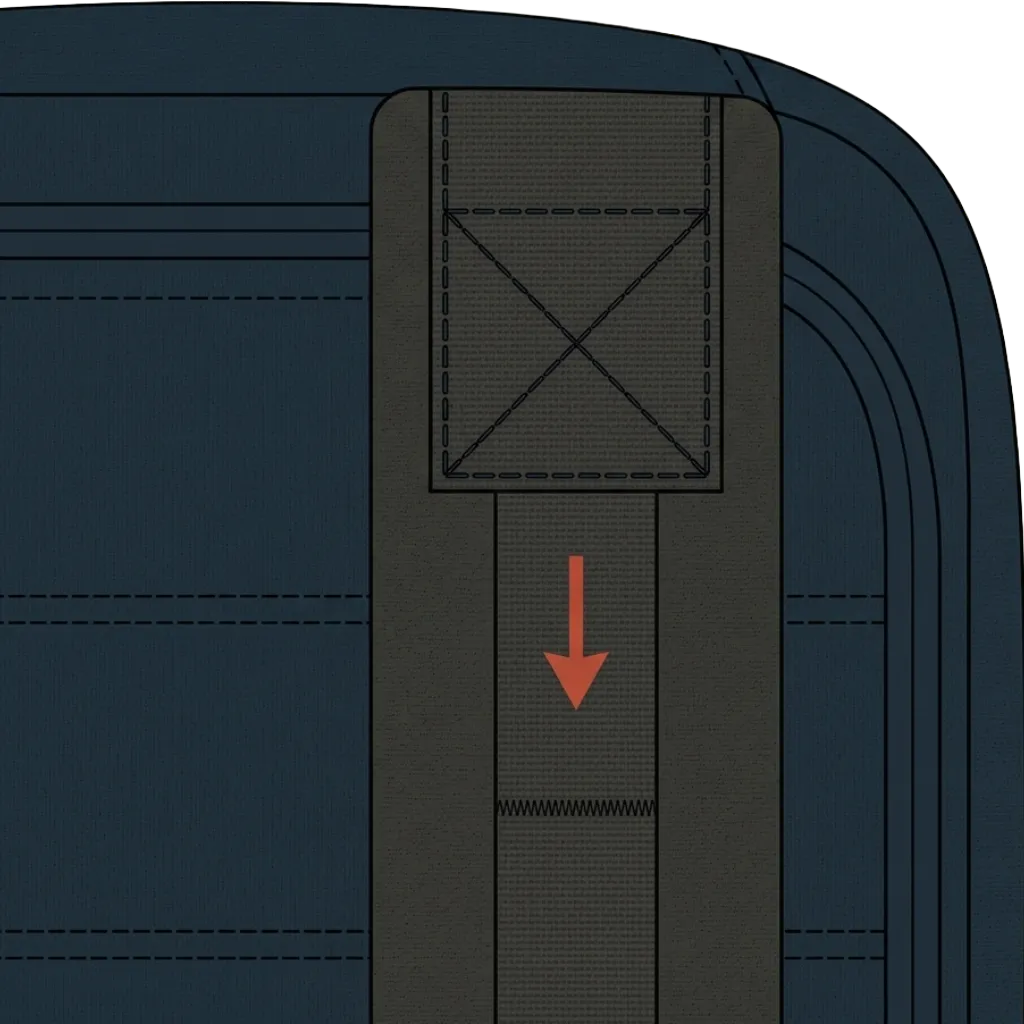
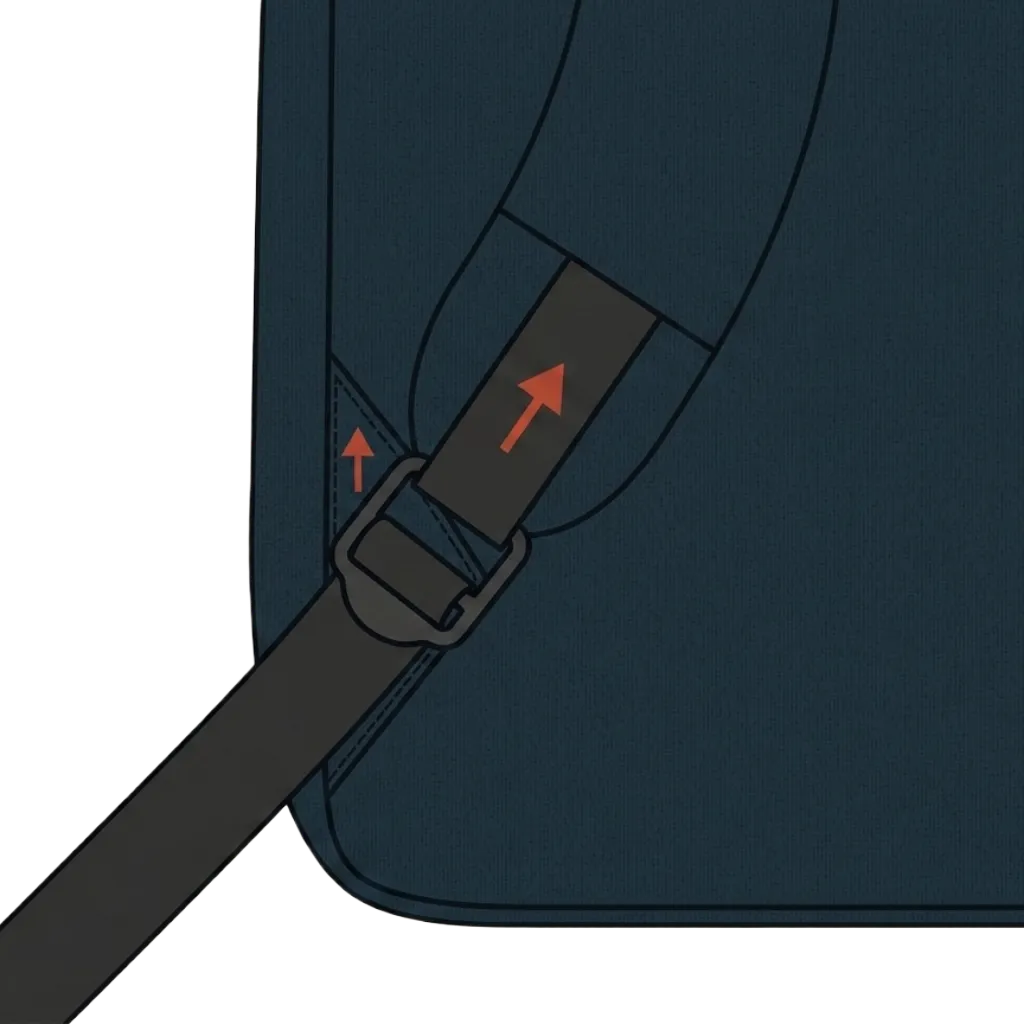
External compression straps run between two anchor points, one at the top of the bag and one at the bottom, and cinch the bag's profile inward when buckled. The reinforcement at each anchor matters as much as the buckle: this is where webbing routinely tears out of cheap bags.
Why it matters
An uncompressed half-empty bag is an unstable, uncomfortable carry. Loose contents shift during walking, creating a pendulum effect that strains your back. Compression stabilizes the load, makes the bag feel lighter, and can be the difference between carry-on compliance and a gate-checked fee.
How to spot it
Test compression on a loaded bag. Strap it down and feel the difference in load stability. Check buckle quality: AustriAlpin and ITW Nexus buckles outlast generic alternatives by a lot. Check strap placement for even compression (uneven strapping causes pressure points). Webbing width matters: 1-inch straps distribute force better than half-inch.
When you don't need it
For highly structured bags where contents don't shift much, or for consistently light loads, compression straps add complexity without benefit.
Key takeaways
- Compression straps stabilize the load. The gain shows up in how the bag feels on your back well before it shows up in volume.
- Check buckle brand (AustriAlpin, ITW Nexus) and webbing width for durability.
- Side compression matters most for airline carry-on compliance and urban navigation.
- External straps are good for attaching overflow gear; internal straps are better for managing contents.
Quick poll
How would you describe your packing style?