Travel-specific features
How to pack a backpack for travel
The order things go in matters more than what you bring.
The hook
The order things go in matters more than what you bring. The order determines what you'll be willing to take out at three in the afternoon when you need it.
What is it
Backpack packing for travel runs on three principles. First, weight against the back panel: dense items (laptop, books, toiletries kit) ride closest to your spine, where the body carries weight most efficiently. Lighter items (clothing, jacket) fill the front and outside. Second, frequency-based layering: items you need in the next four hours go in the top third or in a quick-access pocket; items you need at the destination go at the bottom. Third, stable packing: voids and loose items shift in transit and rearrange the load. Fill voids with soft items, use compression straps if the bag has them, keep liquids and fragiles isolated.
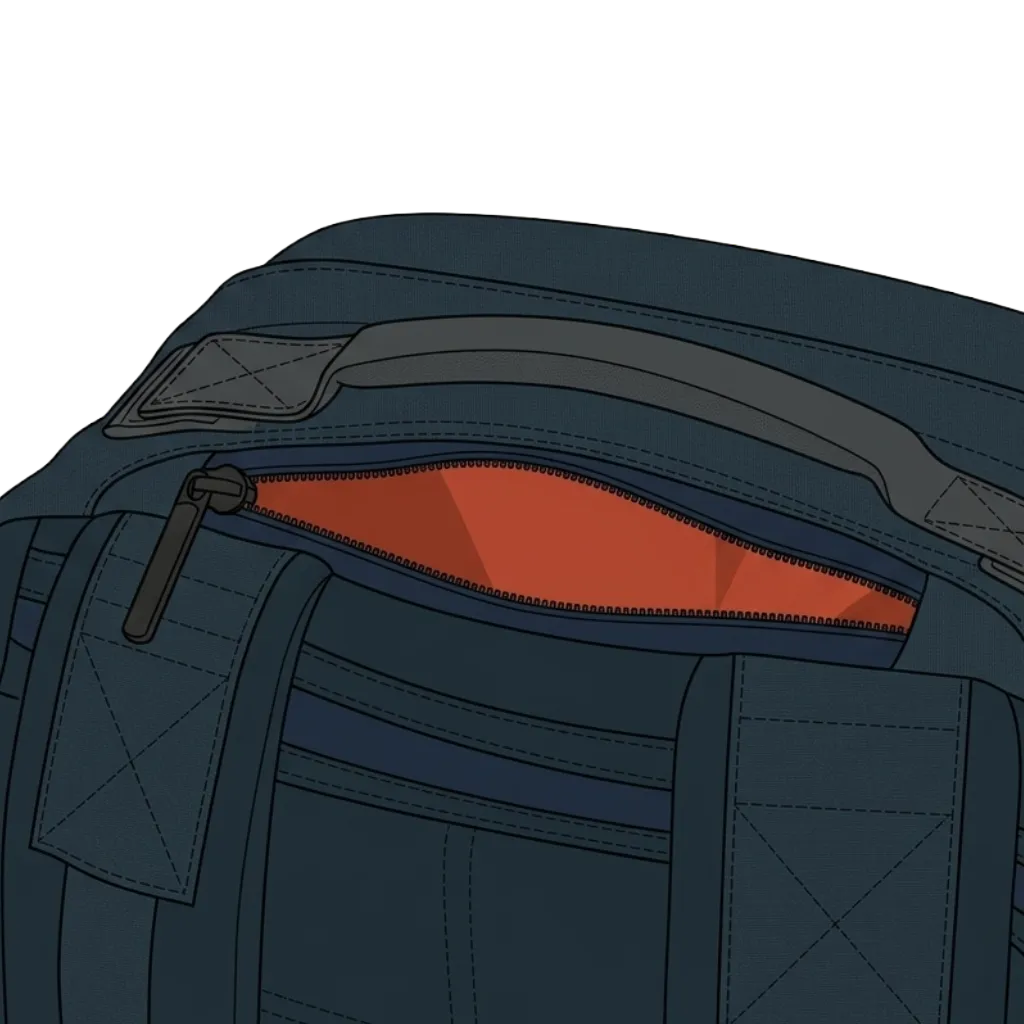
Why it matters
A bag that carries 8 kg comfortably can carry the same 8 kg miserably if the weight distribution is wrong. A laptop riding away from the spine pulls the bag backward and torques the shoulders. A water bottle at the bottom forces a full unpack at the airport. A toiletry bag without isolation soaks the rest of the bag if a cap loosens. These are not theoretical problems. They are the most common failures of an otherwise well-chosen bag.
How to spot it
Test the loaded bag before committing to a configuration. Walk for ten minutes; notice whether the bag pulls backward (weight too far from spine), sways laterally (loose contents shifting), or sits unevenly (one shoulder strap higher than the other). Open the bag once and find the thing you'll need first. If you have to dig, the order is wrong. A correct pack lets you reach the next-needed item in one motion.
When you don't need it
Day-of-flight carry-on packs where you'll only open the bag at the destination. Single-compartment packs where the system is dictated by the bag (top-loaders force a different order; clamshell bags allow more flexibility).
Key takeaways
- Heavy items ride against the back panel. Always. The body carries weight there most efficiently.
- Frequency dictates depth: top third for the next four hours, bottom for the destination.
- Voids shift contents. Fill them with soft items or compress them out.
- If you have to unpack to find the next thing you need, the packing order is wrong. Not the bag.
Quick poll
When you pack a bag for a trip, what's your method?