Access types
Quick-access pockets: the grab-without-digging compartment
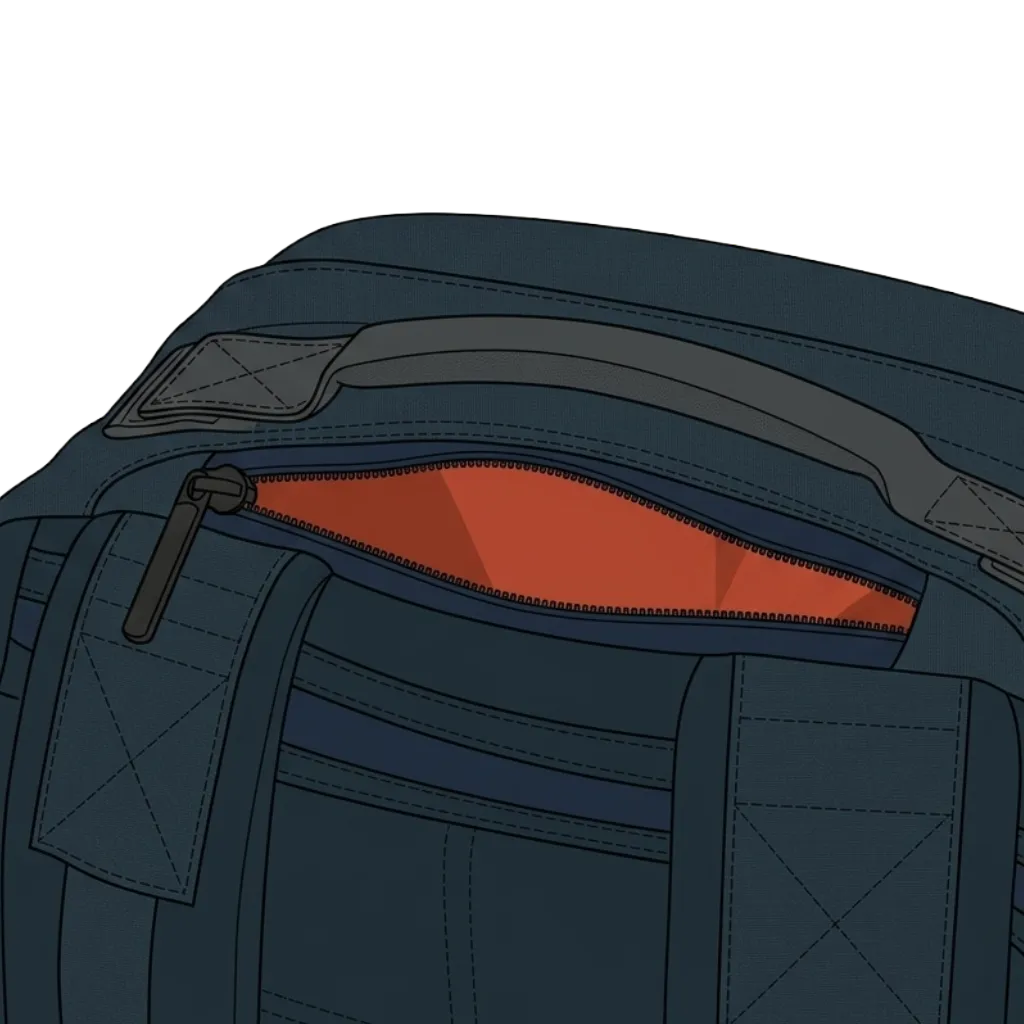
The small top zip that decides whether your phone is a reach away or a two-hand excavation.
The hook
You're at the gate, or the turnstile, or the rain just started. Phone, keys, transit card: the thing you need right now is somewhere in the main compartment, under the laptop, past the lunch. A quick-access pocket exists for exactly that moment: one small space you can open without opening everything else.
What is it
A quick-access pocket is a small compartment kept separate from the main bag and positioned for one-handed reach. The classic form is top-mounted: a slim horizontal zip near the grab handle, opening into a shallow pouch that sits above the main compartment. The same idea shows up on the front face and, on larger bags, on a hip belt. What defines it isn't where it sits but what it optimizes for: getting to a few specific items fast.
That makes it a different thing from the top-loading closure, which is how the main compartment itself opens, and from a built-in admin panel, which is about laying out many small things at once (covered in pouches vs. admin panels). A quick-access pocket does one job: shortest path to the handful of items you touch most.
Why it matters
The main compartment is built for volume. The quick-access pocket is built for time. Reaching your phone from the main compartment is six motions: swing the bag down, open the closure, move whatever's on top, find it, replace, close. From a top pocket it's two: unzip, grab. Over a day of transit, gates, and doorways, that difference is most of why the bag feels easy or feels like a chore.
Placement also decides who else can reach it. A top or front pocket is fast for you and fast for a hand behind you in a crowd, the same trade the front-panel versus back-panel choice makes for the whole bag. Put your passport in the top zip for speed and you've also put it where it's easiest to lift. Speed and security pull in opposite directions here, and the quick-access pocket is firmly on the speed side.
How to spot it
Open it and check four things. Is it truly separate, or does it just spill into the main compartment through a shared opening: a "pocket" that's really a second zipper on the same space. Is it lined or structured, so a phone and sunglasses aren't crushed against whatever's packed below. Can you reach it while wearing the bag, or does the design assume you'll always take it off. And how deep is it: depth here is volume borrowed from the main compartment.
The good version is shallow, reachable, and shaped for its contents. The weak version is a flat slot with no structure that flattens under a full main bag.
When you don't need it
When it steals space you'd rather keep. A deep top pocket is a small bag bolted onto a bigger one, and every liter it holds is a liter the main compartment lost. If you pack the main bag to the top, that pocket is working against you.
When you carry little enough that everything is already a reach away. A near-empty bag doesn't have a digging problem to solve.
And when the pocket has no defined job. The unlined top pocket sold as a "sunglasses pocket" is the feature people stop using first, because nothing was ever assigned to live there. A small pouch you clip into any bag does the same grab-fast job and moves with you when you switch bags. The quick-access pocket earns its place only when you can already name the three things that belong in it.
Key takeaways
- A quick-access pocket earns its place by latency, not capacity: the thing you reach for most, reachable in one motion without opening the main compartment.
- Top-mounted is the fastest to reach while the bag is on your shoulder or sitting between your feet. Front and hip-belt versions trade a little speed for a lower profile.
- The pocket borrows its volume from the main compartment. A deep quick-access pocket is a small bag glued to the top of a bigger one.
- The unlined "sunglasses pocket" is the most abandoned feature in everyday carry. If you can't name what lives there before you buy, it becomes a second junk drawer.
Quick poll
When you need your phone or keys in a hurry, where do you reach?