Hydration & water features
Hydration ports and water bottle storage
Bladder ports, external pockets, and internal sleeves. Everything water-related in one place.
The hook
Most bags don't need a hydration port. For the use cases that do, the implementation matters as much as the feature.
What is it
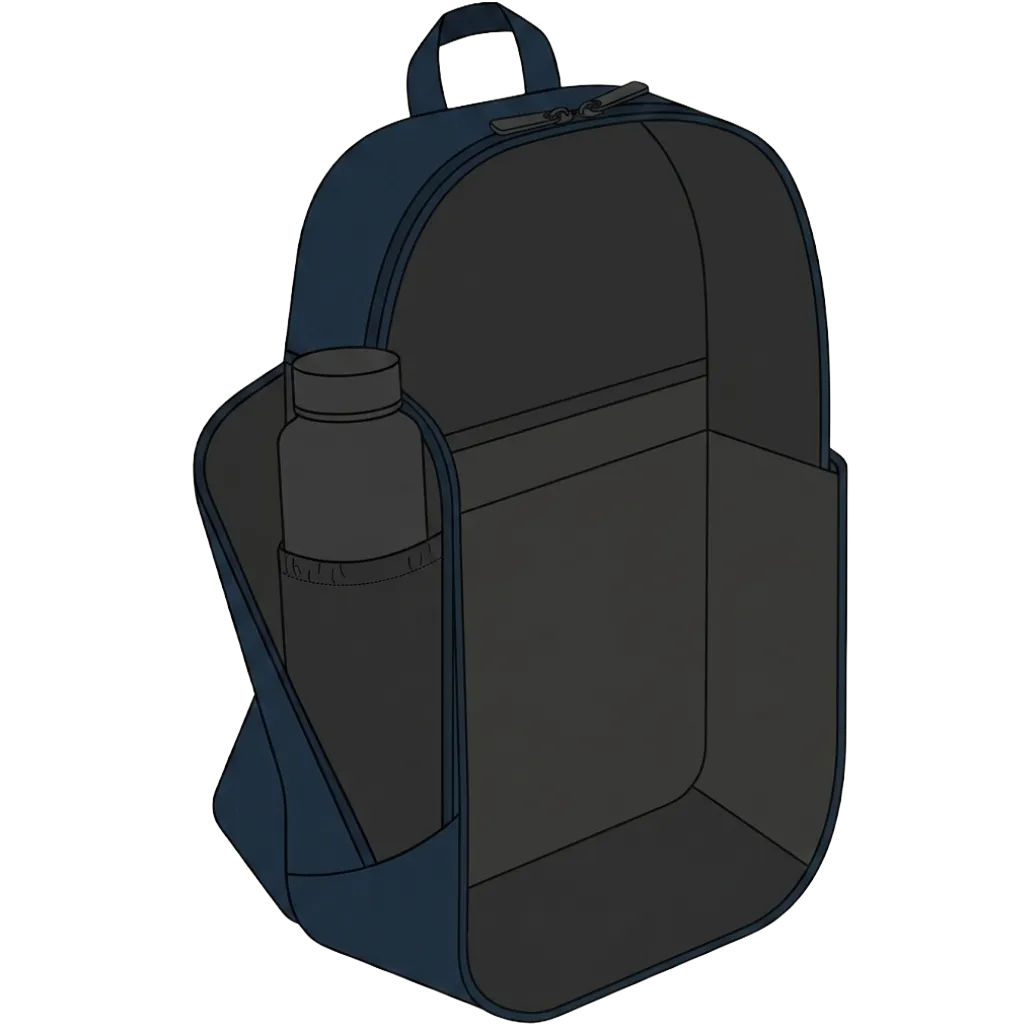
A hydration port is a small, covered opening in the bag through which a hydration bladder's drinking tube is routed. Internal sleeves stabilize the bladder (usually 1.5–3L) against the back panel. The tube routes through the port and clips to a shoulder strap for easy access. Quality ports have covers that seal against rain ingress. The internal sleeve should have a hook or hanger to suspend the full bladder. Water-bottle pockets are the simpler alternative and come in a few flavors: fixed-size sleeves (rigid fabric sized for a specific bottle range; anything outside the range falls out or won't fit), stretch mesh (accommodates bottle size variation but lets bottles pop out at the top during movement), and side-mounted vs. front-mounted (side keeps the bag's profile clean and is reachable while wearing; front trades reach for a more secure carry). Some bottle pockets are external and visible; some are internal and eat into main-compartment volume. The internal ones can read as less professional in formal contexts.
Why it matters
Hands-free hydration is essential for activities where stopping to grab a bottle is inconvenient or dangerous: trail running, cycling, scrambling, and long-distance hiking. Keeping the bladder against the back panel maintains weight distribution and center of gravity better than side-mounted bottles.
How to spot it
Check that the port is sealed when the tube isn't routed through it. The internal sleeve should suspend the bladder high on the back panel, not let it slump at the bottom. Look for hook and loop closures at the top of the sleeve and a drain hole at the bottom for spill management.
When you don't need it
For casual everyday use, urban commuting, or any activity where stopping to drink from a bottle is easy, hydration ports add complexity without meaningful benefit. Water bottle pockets are simpler, easier to clean, and more versatile.
Key takeaways
- Hydration ports are essential for hands-free activities like trail running and cycling; unnecessary for most daily use.
- The internal bladder sleeve quality matters as much as the port itself. Check how it suspends the bladder.
- Water bottle pockets are more versatile and easier to care for, for most people.
- If you have a hydration port, also check that the tube routing doesn't interfere with shoulder strap adjustment.
Quick poll
What's your main hydration setup when carrying a bag?