Organization & modularity
Hidden pockets and security features
What makes a pocket invisible to someone standing behind you in a crowd, and which features deter them.
The hook
A pocket isn't hidden because the brand calls it hidden. It's hidden when an opportunist standing behind you in a crowd cannot see it, cannot reach it, and cannot tell the bag has it.
What is it
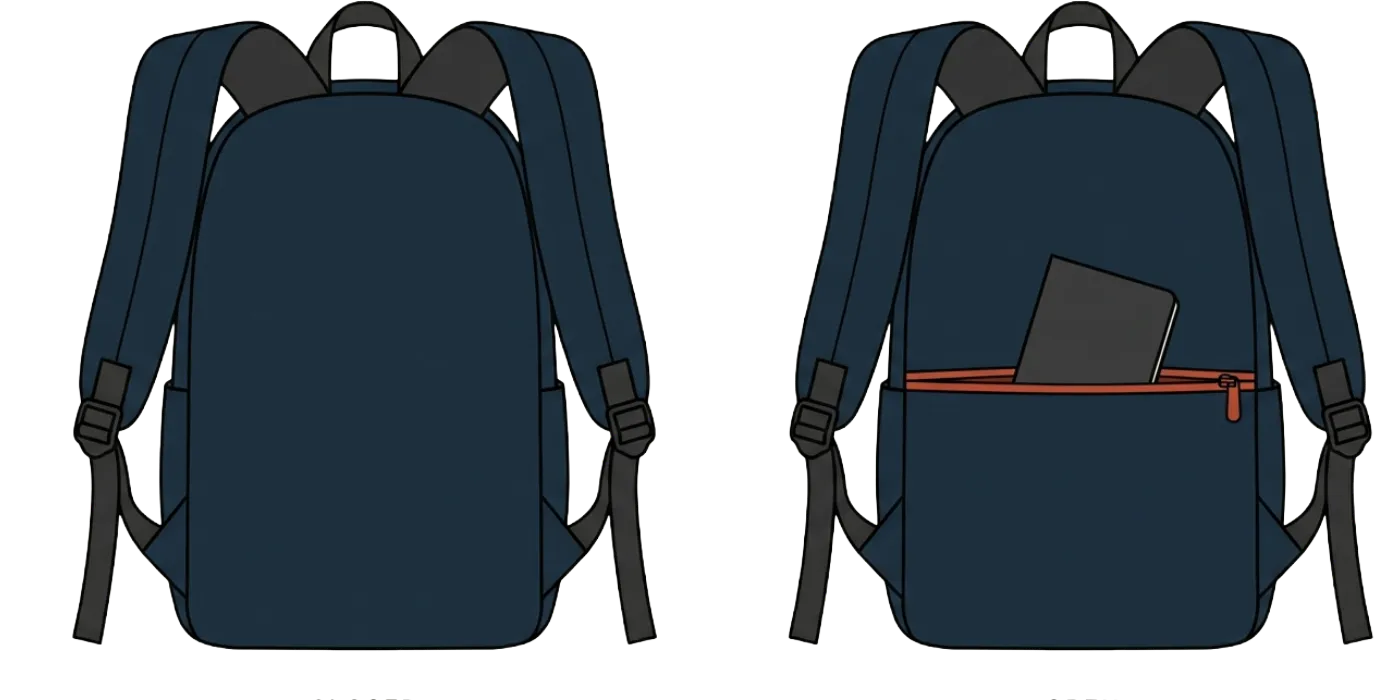
Hidden pockets are intentionally positioned to be non-obvious: against the back panel (inaccessible when the bag is worn), inside another pocket, or within shoulder straps. Security zipper designs include concealed pulls (blending into fabric), dual-pull zippers with lockable loops, and zippers that need two hands to open. RFID-blocking pockets contain metallic mesh that prevents electronic skimming of chip-enabled cards and passports.
Why it matters
In crowded environments (markets, transit, tourist sites), opportunistic theft targets visible, accessible external pockets. Hidden placement, combined with concealed zippers, sharply raises the effort threshold for thieves. RFID blocking adds a layer of protection against skimming, though documented real-world attacks on modern chip cards are rare. The feature is inexpensive to add and harmless to have.
How to spot it
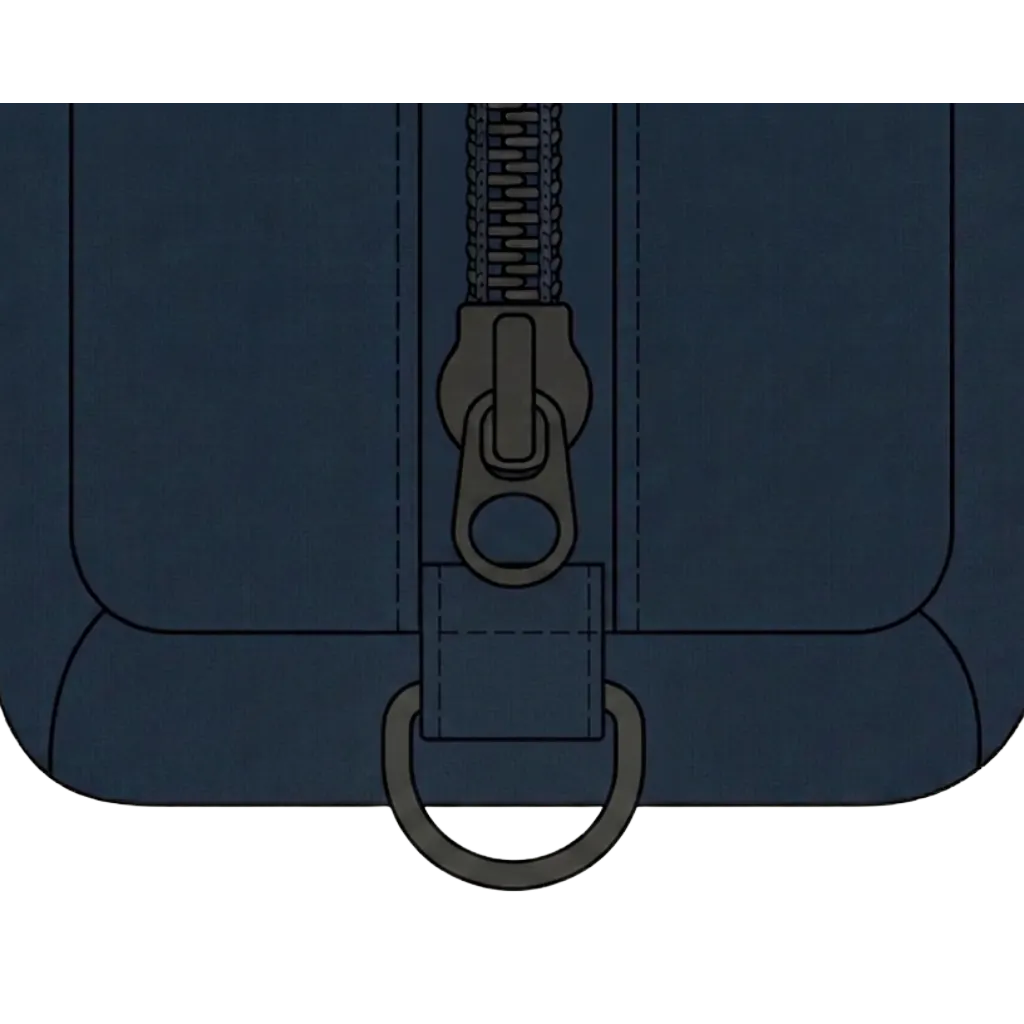
From an outside observer's perspective, can you spot the hidden pocket? That's your test. Check concealed zipper pulls. Are they flush with the fabric when closed? Test RFID blocking effectiveness with a card reader if the protection matters to you. Check lockability: paracord through dual zipper pulls plus a small carabiner creates a light, deterrent lock.
When you don't need it
For bags used only in secure, low-risk environments (office, home, familiar neighborhood), security features add complexity without corresponding benefit. If you carry minimal valuables or prefer keeping them in a money belt, hidden pockets are less important.
Key takeaways
- Hidden pockets work through obscurity. The best ones aren't discoverable by casual observation.
- Concealed zipper pulls are the most practical pickpocket deterrent. Visible pulls are an invitation.
- RFID blocking is inexpensive to include and doesn't hurt. Whether you're likely to face the threat it addresses depends on where you travel and the age of your cards.
- Dual-pull zippers with a small carabiner or paracord make a lightweight, deterrent lock for main compartments.
Quick poll
Have you ever had something stolen from your bag?