Bag basics
Expandability: when your bag needs to be two sizes
Roll-tops, beaver tails, shock cord, and zippered panels: how bags grow.
The hook
Some days you carry a laptop and a notebook. Other days you're adding a jacket, gym clothes, and a packed lunch. Not every bag grows with you.
What is it
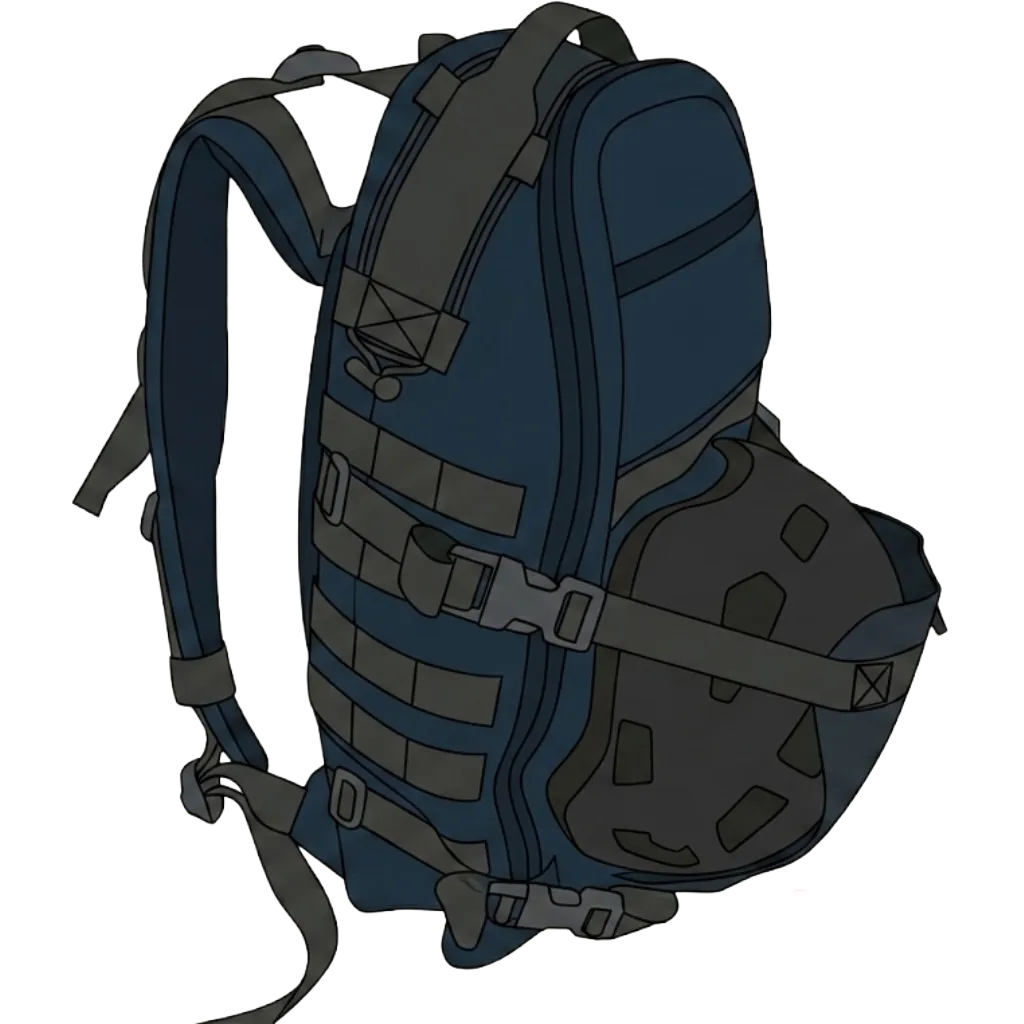
Bags expand in five main ways. Roll-top expansion: unrolling the top adds 3–8L depending on the bag, but the top is no longer sealed and the access pattern changes. Beaver tail panels: an external flap extending from the back of the bag, secured with buckles or compression straps, designed to hold overflow items like a jacket or sleeping pad against the exterior.
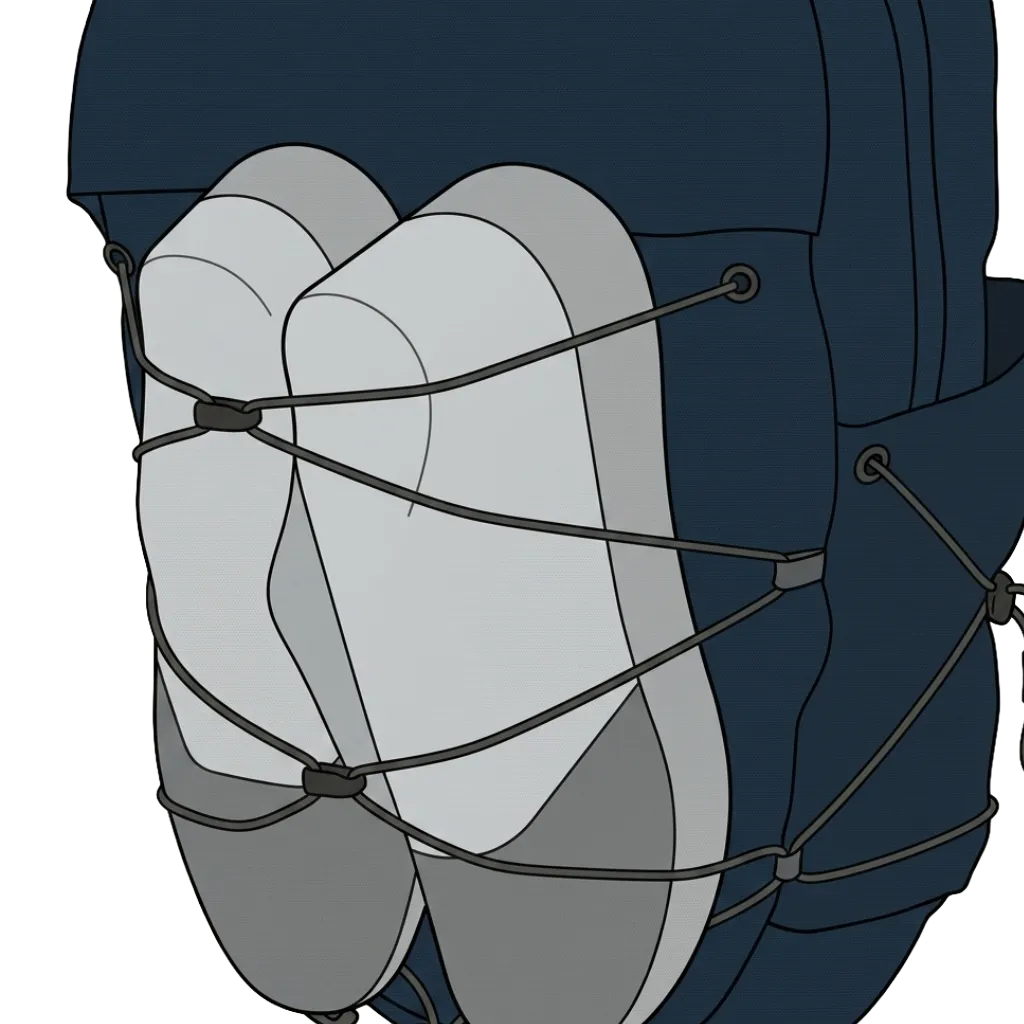
External cord systems lace across the front or side of the bag for securing soft, compressible items quickly. They're sold as shock cord, bungee, or paracord lacing depending on what's strung through them. The names point to different cords with different behavior. Shock cord and bungee are the same thing: an elastic cord that stretches over an item and grips it under tension. Paracord is static braided nylon, holds whatever shape you knot it into, and is better for lashing a fixed-shape item (shoes, a sleeping pad, a tripod) than for gripping something compressible. Either way, the system is right for soft overflow only. Never hang anything heavy or expensive externally.
Zippered expansion panels: a zipper running around the bag perimeter that adds a fixed volume when opened, typically 5–10L, more structured than roll-top but less adaptable. Compression-expansion hybrids use combinations of these systems to cover a wide volume range.
Why it matters
Variable carry is one of the most common real-world bag problems. Buying a larger bag to handle occasional overflow means carrying excess space and weight every other day. A well-designed expandable bag handles both situations in one package.
How to spot it
Test roll-top expansion range by rolling the top fully down and fully up. Check whether the volume difference is meaningful for your use case. For beaver tails, check the attachment system: buckles should be quality AustriAlpin or equivalent, not plastic clips. For shock cord systems, test load limit by hanging something equivalent to your typical overflow item. Zippered expansion panels should have quality zippers and keep bag structure when expanded.
When you don't need it
If your carry is consistent day to day, expandability adds hardware weight and complexity with no return. A well-fitted fixed-volume bag is lighter and simpler. Expansion systems also add points of failure. More components means more things that can wear or break.
Key takeaways
- Roll-tops have the widest expansion range but change the access pattern. Test the tradeoff before buying.
- Beaver tails are for external overflow (jackets, pads), not substitutes for main compartment volume.
- Shock cord and bungee are elastic and grip compressible items; paracord is static and lashes fixed-shape items. Both are for soft overflow only. Never hang anything heavy or expensive externally.
- If your carry rarely varies, fixed-volume bags are simpler, lighter, and more reliable. Fewer moving parts means fewer points of failure.
Quick poll
Do you ever need your bag to carry much more than usual on certain days?